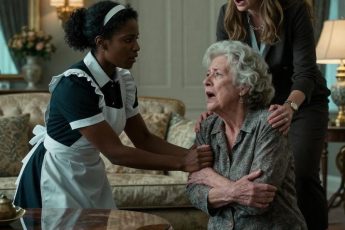
Within the sprawling halls of the Whitman estate, a silent dread hung heavier than the ornate chandeliers overhead. No one dared voice it aloud, yet all felt the grim inevitability: little Clara Whitman was slipping away, her light dimming with each passing day.
The doctors had delivered their verdict with clinical coldness, their words slicing through the air like a death sentence—three months, maybe less. Three months to live.
Victor Whitman, the billionaire titan used to bending the world to his will, now found himself powerless. His empire of wealth and influence faltered helplessly before his daughter’s fragile body. The immaculate mansion, laden with untouched luxury, echoed with a guilt-laden silence. It wasn’t peace that filled the vast rooms, but a heavy, suffocating void that clung to every corner, whispering of loss.
Victor spared no expense: top specialists, cutting-edge medical technology, nurses rotating in shifts, animal therapy to coax life into Clara’s pale form, soothing melodies, imported toys, blankets in hues of soft lavender—the walls painted meticulously in Clara’s favorite shades. Everything was flawless… except for the one thing that mattered most.
Clara’s eyes were distant—vacant pools reflecting a world she no longer seemed part of. Since his wife’s tragic passing, Victor had retreated from the boardrooms and business summits, abandoning the empire that once defined him. The empire could endure without him, but Clara’s fading spark couldn’t.
Her days traced a rigid routine. Dawn found Emily Harper already awake, her movements deliberate and tender yet heavy with unseen sorrow. She prepared breakfast that Clara rarely touched, carefully administered medications, and chronicled every subtle breath and fluttering eyelid in a neat notebook. In these tiny observations was her desperate attempt to seize time itself.
Clara rarely spoke—when she did, it was barely a nod or a shake of her head. Most often, she sat by the wide window, staring out at the shifting light, as if the world belonged to someone else.
Victor talked to her endlessly, weaving stories of distant travels, inventing fairy tales, promising miracles. Yet the silent chasm between them widened, a heartache made worse by the inability to bridge it.
Then Emily arrived.
Emily Harper lacked the customary sparkle of a mansion housekeeper. No bright smiles, no confident assurances of fixing the unfixable. Instead, she carried a profound quiet—a calm born from having wept all tears there were to shed.
Months prior, Emily’s own life had shattered: the loss of her newborn plunged her into a bleak survival, a silent room haunted by imagined cries and an empty crib. When she found the ad for a caregiver position at the Whitman estate—light duties, no specialist credentials required, just patience—something stirred within her: a fragile thread of hope entwined with fear.
Victor greeted her with weary formality, laying down strict rules of distance, respect, and discretion. Emily accepted without question, retreating to a modest guest room at the estate’s far end, her belongings sparse as if she sought to disturb nothing.
Her first days were quiet, watching. She tidied, replenished supplies, drew back curtains to flood the rooms with soft light, arranged pastel blooms, and folded blankets with care. She didn’t rush to touch Clara; instead, she observed from the thresholds, understanding a loneliness deeper than words.
What unsettled Emily most was not Clara’s fragile, receding hair or her ghostly pallor but the emptiness—Clara was there, yet not there. It mirrored the hollow she herself knew too well after returning home to silence.
Emily resolved to wait.
She placed a delicate music box near Clara’s bed. Its gentle melody coaxed the faintest of reactions—a subtle turn of the head. Emily read stories aloud from the doorway, voice steady, presence gentle and unpressured.
Victor, watching from afar, felt a subtle warmth stirring in the cold mansion. Emily brought no intrusive noise, yet she filled the space with a tender light.
Late one evening, Victor glimpsed Clara clutching the music box, a fragile wish held close in trembling hands. Summoning Emily, he simply said, “Thank you,” his voice thick with a mix of relief and wonder.
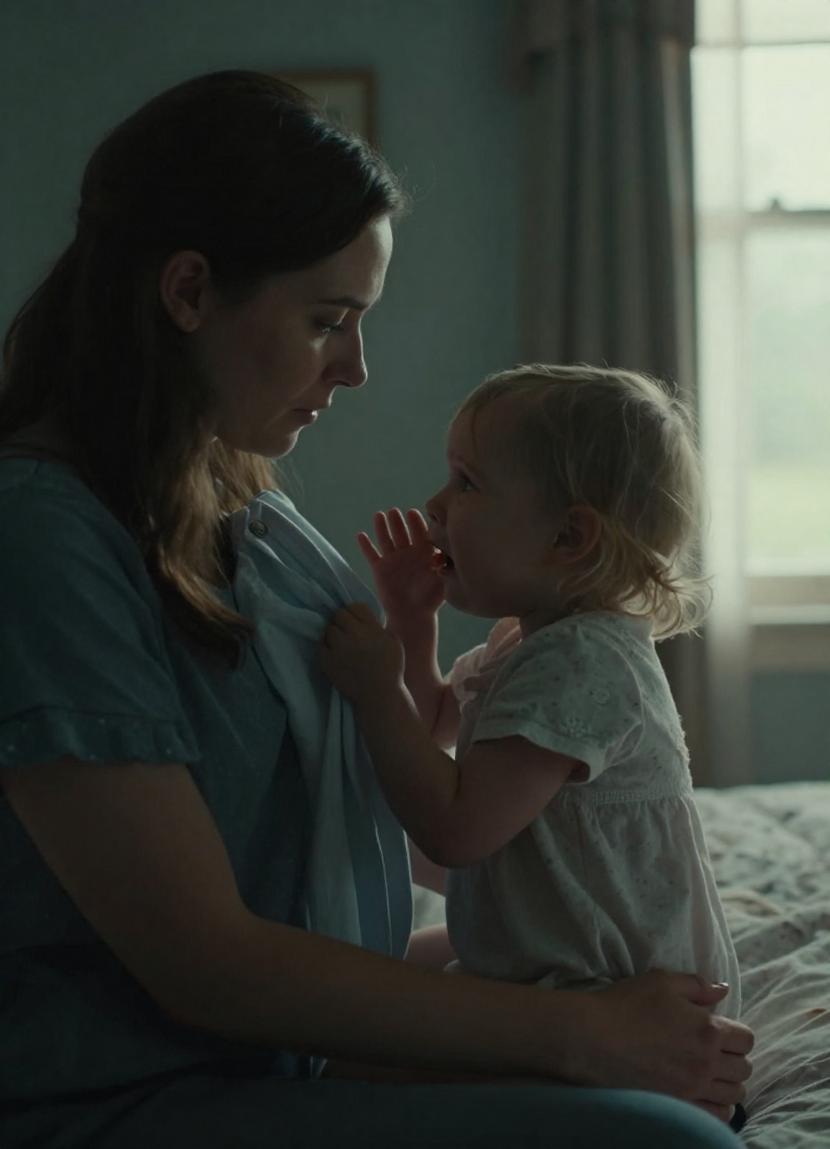
Weeks slipped by and trust took root. Clara allowed Emily to brush her fine new hair. Then, in a quiet seizure of emotion, Clara shuddered suddenly, clutching Emily’s shirt, whispering faintly, “It hurts… don’t touch me, Mommy.”
Emily froze, struck not by the pain but the word—Mommy. Clara seldom spoke, and that word carried not accident but memory, laden with an old fear.
Hiding the turmoil within, Emily lowered the brush and whispered, “Okay. We’ll stop for now.”
That night, sleepless, Emily pondered. Victor had said Clara’s mother was gone—so why did that word bring such terror? Why did Clara flinch as though expecting a scream?
In the days that followed, Emily noticed patterns: sudden flinches at shadows, stiffening at raised voices, worsening symptoms after certain medications.
Her quest for answers led to a forgotten storeroom, where she uncovered boxes marked with faded labels, bottles named in foreign tongues, and ominous red warnings. Dates spanned years. One name appeared repeatedly:
Clara Whitman.
Photos taken, a night spent researching—Emily uncovered a chilling truth. Experimental drugs, harsh side effects, substances outlawed elsewhere. This was no tender care.
It was a danger map.
Emily imagined the tiny body receiving potent doses meant for something else. Fear surged, but with it, a fierce protective anger awakened.
She kept silent—not yet telling Victor. She saw his quiet vigil beside Clara’s bed, but Clara was in peril, and she trusted Emily.
Emily began meticulous documentation—timing, dosage, reactions. She scrutinized nurses, compared medicines in bathrooms and storerooms.
The most shocking discovery: dangerous drugs were still given, despite orders to stop.
The atmosphere shifted palpably the day Victor entered unannounced and found Clara, for the first time in months, resting peacefully against Emily. His confusion sparked sharper words than intended.
“What are you doing, Emily?”
Emily rose swiftly to explain, but Victor recoiled, hurt and uncertain, sensing a boundary crossed.
Panic seized Clara.
She clung tightly to Emily, her whispered plea desperate and clear: “Mommy… don’t let him scream.”
The silence that followed was no ordinary hush—it was an awakening.
Victor stood frozen, realization crashing over him: Clara was not only sick—she was terrified.
And she was reaching out not to him, but to Emily.
That night, Victor locked himself away, reading Clara’s medical files with the raw edge of betrayal. Drug names, dosages, baffling recommendations; hope faded into a dawning horror.
Morning brought swift action: several medications were halted without explanation to nurses or Emily.
Yet a fragile miracle emerged.
Clara seemed more present—she ate a little, requested stories, smiled with shy, precious hesitance.
Emily knew the secret could no longer be hers alone.
On her day off, she brought a hidden bottle to Dr. Helena Foster at Silver Oak Clinic. Helena listened without judgment and sent the medicine for analysis.
Days later, the call confirmed Emily’s fears.
“Emily,” Helena’s voice was firm, “this isn’t for children. The dosage… it’s brutal.”
Reports showed extreme organ damage, immune suppression—not strength, but poison.
The name shadowing every prescription:
Dr. Nathaniel Crane.
Emily confronted Victor with the report, her tone steady, truth laid bare without theatrics.
Victor’s face ashen, hands trembling. “I trusted him,” Emily whispered. “He promised to save her.”
What followed was not anger, but a grave stillness.
Together, Victor and Emily uncovered a tapestry of deceit—other families silenced, other children harmed by Crane’s reckless experiments.
They chose not silence; they brought the truth to the prosecutor.
The investigation peeled back layers of corruption, pharmaceutical entanglements, unauthorized trials. Headlines erupted. Media stormed in. Shadows followed—blame, threats, attempts to fracture their resolve.
Victor’s rage blazed; Emily stood firm.
“If they fear us,” he told her, “it’s because we shine a light on the darkness.”
Within the Whitman estate, a quiet transformation unfolded.
Clara began reclaiming life—not quickly, not easily, but step by delicate step.
She asked to stroll in the garden, giggling faintly when Victor brought her favorite treats. Her fingers danced more confidently across crayons, coloring not just empty forms, but hands held, open windows, warm colors.
When the trial commenced, the courtroom overflowed—not only with witnesses of wealth and courage, but faces marked by sleepless nights and relentless hope.
Emily’s testimony was calm, without tears, yet every word carried weight. Victor followed, admitting his blindness without excuse, confessing, “Fear can blind even the sharpest mind.”
On the third day, a drawing from Clara was presented—the image of a bald girl grasping two hands, beneath it, in trembling letters: “Now I feel safe.”
Silence enveloped the room.
Because in that moment, everything was understood.
This was never paperwork. It was life.
The verdict came swiftly: guilty on all counts. No applause, just a collective exhale of relief. Dr. Nathaniel Crane was convicted, reforms promised to curtail experimental treatments on children.
For once, the system was forced to confront itself.
Back at the estate, the mansion hummed with vitality: laughter, footsteps, music, the scratch of pencils on paper.
Clara started school—timid but proud. Friends made. Hands raised. Notebooks filled with vibrant drawings telling of both past wounds and a hopeful future. Teachers marveled at her talent.
The once-silent girl found her voice—through color, through expression.
At a school event, Clara stepped onto the stage clutching an envelope. Emily, watching in the crowd, unaware.
Taking a breath, Clara read aloud: “Emily has always been more than my caregiver. She is my mother in every way that truly matters.”
A social worker announced the adoption official.
Emily’s tears spilled freely, long withheld. Clara ran into her arms amid a rising wave of applause. Victor let his guard fall, tears making the only sound he needed to utter.
Years passed.
Clara matured—scarred yet radiant with an indomitable light. Victor reemerged as a father present and true. Emily’s role transformed beyond employee.
They were family.
One gentle afternoon at Harborview Gallery, Clara unveiled her first art exhibition: hospital beds, white windows, clasped hands, shadows blossoming into vivid color.
Facing the crowd, Clara spoke with clarity: “Many believe my strength came from medicine, but my true strength blossomed from Emily’s heart. She loved me when I was hardest to love. She stayed, even when I couldn’t ask for it.”
Standing ovations rose.
Emily took Clara’s hand while Victor smiled, a serene pride in his eyes—the pride of a man who finally understood what truly matters is not what you possess, but who you —and they —choose to protect.
That night, returning home, the Whitman estate felt transformed. No longer vast or perfect, but alive.
Emily realized, deep in her soul, that life rarely restores what was lost in the same form.
Sometimes, it offers a second chance to love, to become a sanctuary, to shatter the silence that festers.
And it had all begun with a whispered word in a silent room… a word that, unbeknownst to all, was destined to unveil a long-buried truth.