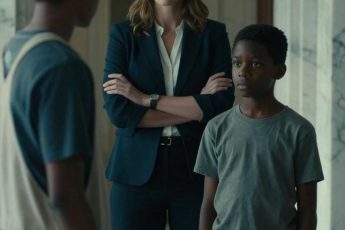
My name is Isabela, and this is the story of how a three-year relationship I thought was solid shattered in an instant. It didn’t unravel in quiet talks or mutual understanding — it exploded in a ruthless 15-second TikTok clip, watched by 17,000 strangers who discovered what Diego truly thought of me before I did.
I met Diego when I was 21 — the charming guy at a party who knew exactly how to fix a jammed garbage disposal. That instant competence seemed like a green flag. We swapped Instagrams, exchanged texts, and before I knew it, we were entwined in a routine together.
Our life had a comforting cadence: Netflix documentaries on Thursdays, dinners at his mom’s every other Sunday, camping in the summers with his friends. He remembered my birthday; he actually listened when I spoke about my day. In today’s world of fleeting connections, that felt like finding a unicorn. Compared to my last boyfriend—who thought ’emotional labor’ was a childbirth term—my bar was embarrassingly low.
Diego made me feel safe. Loved. The night before everything unraveled, he was at my apartment. We cooked dinner, dreamed aloud about moving in together once my lease ended in August. He kissed me at the door with a warm “Love you, babe.” Easy, normal — utterly false.
Fast forward to Tuesday. I was on my lunch break at the salon, scrolling through my phone. A text from Marisol popped up: a TikTok link with “CALL ME NOW” in all caps. Marisol is no drama queen; if she said “slight issue,” it meant a flood. My stomach clenched.
I hit play. There was Diego, standing in The Rusty Anchor, the dive bar where his buddies gather Mondays — the neon Budweiser sign behind him flickering like a taunting metronome. He was six beers deep, flushed, arm around his friend Santiago.
Someone off-camera shouted, slurring: “Rate your girl, bro!”
Then Diego’s face twisted into a cruel smirk I’d never seen — the unfolding of some dirty secret.
“Isabela?” he slurred, eyeing the camera. “Honestly, the most hideous girl I’ve ever dated. Like, a four. On a good day.”
The bar erupted with “Oohs” and “Savage!” someone hollered.
Diego laughed, didn’t stop. “But hey, she cooks amazing enchiladas and never complains when I’m out with the boys, so I keep her around. Low-maintenance, you know?”
Someone asked if he worried I’d see it. Without hesitation, he sneered: “Nah, she doesn’t even know what TikTok is. Besides, thinking about upgrading soon. Too much baggage.”
The timestamp: 11:43 p.m. Monday. While I was at home, masking my face with clay and whispering good night texts, he shattered me in front of thousands.
My heart plunged into a cold void. Three years. That’s what he really thought — I was a convenience, a placeholder.
I texted Marisol: ‘Coming over after work. Don’t tell anyone.’
Then I muted my phone, stuffed it in my bag, and dragged myself through three client appointments without falling apart.
That evening, I skipped home. Instead, I went to Market Street and wandered the aisles in a numb haze, buying a cheap duffel and stuffing it with essentials: toothbrush, deodorant, chargers, a few t-shirts — $47.16 later, I held a receipt that marked my before and after.
I pulled into Marisol’s parking lot at 6:13 p.m., sitting for twenty silent minutes, replaying that video in my mind like a broken record. Hideous. Four. Upgrade. Casual cruelty. Every lie Diego had told about how beautiful I was — when I was sick, insecure, or dressed up — eclipsed by one brutal moment.
Marisol didn’t ask questions. She pointed to her pull-out couch, handed me a glass of cheap rosé, and simply said, “What’s the plan?”
I decided then: no dramatic showdown. No tears, no begging, no performance he could regale his friends with. I would vanish.
We made a checklist: block Diego everywhere, change passwords he knew, call out from work, hide whereabouts except from my mom.
By midnight, Diego had texted seven times — casual at first, then desperate: “Where are you? Please answer.” By afternoon, twelve calls. Not one apology. Just entitlement. He wasn’t sorry; he was annoyed I caught him.
I stayed with Marisol for two days, hiding and binging Love Island — trash TV strangely comforting. Cried in the shower so no one heard, ordered too much Uber Eats.
On Friday, Marisol went to my apartment to grab clothes. Diego had been there: empty energy drinks, his jacket tossed on my couch, a note on my door reading, “Call me. We need to talk.” Still no explanation.
The TikTok vanished from his account Thursday night — too late. Screen recordings flooded my inbox. My phone buzzed nonstop with worried texts from old friends.
That weekend was a blur: dodging unknown calls, jumping at knocks, glaring at Diego’s Instagram stories filled with vague, sad songs and cryptic regret.
Monday, 32 missed calls. Back to work, needing normalcy. My manager hugged me, telling me the video hit her For You Page too. She offered time off, but I needed to anchor myself.
Diego showed up at the salon during lunch. I hid in the supply closet as a coworker told him I wasn’t there. His voice, low and tired, reached me. Good.
Tuesday morning, missed calls hit 37. A new text from a different number: “Please.”
I went home briefly for mail, thinking 8:00 a.m. was safe — Diego usually left work at 7:30. Wrong.
There he was on my welcome mat — the one he gave me that says, “Home is where the Wi-Fi connects automatically.”
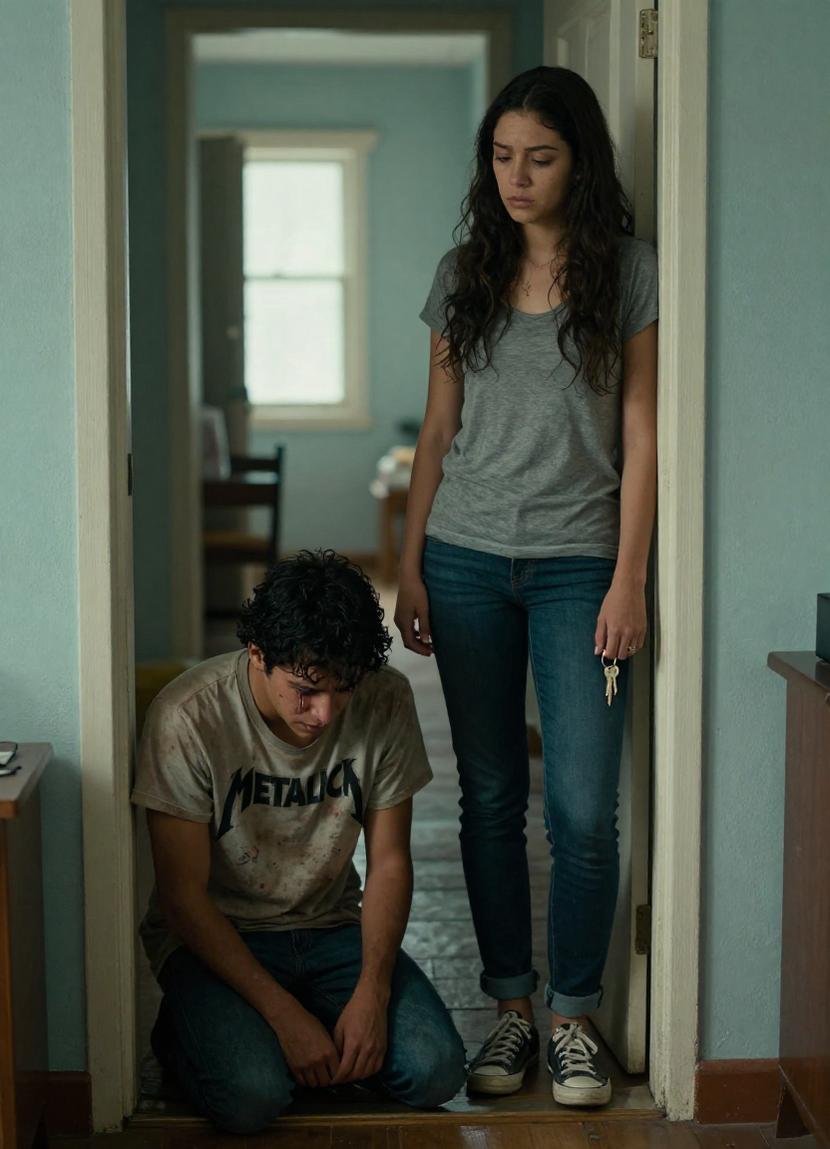
Disheveled, unshaven, Metallica tee stained and worn from a recent Instagram story. When he saw me, his body gave out; he collapsed to his knees, tears streaming, whispering, “Isabela… Isabela…”
I stood silent, keys clenched. Emptiness, flood, numbness.
“Please,” he sobbed. “I’m sorry. I didn’t mean any of it. Drunk, pressure from the guys… Please, just talk.”
Coldly, I cut him off: “I saw what you truly think. There’s nothing left to say.”
I stepped around him, collected my mail, and walked away. He followed, crying, begging. I locked car doors and fled to Marisol’s. Diego called five more times crossing town.
That night, in Marisol’s kitchen, she handed me a White Claw, eyes gentle. “Have you been ignoring red flags all along and just hoping it was love?”
I bristled at first. Diego was good to me, right? But Marisol’s questions dug deep.
“Did he ever mock your looks?” A smirk about “wide jeans,” a snide comment on my highlights. Always pointing out celebrities he found ‘attractive’ — lean, no-makeup types unlike me.
“Did he support your dreams?” Proud once, but quick to discourage the promotion, dismiss school plans as “too expensive.”
“Were standards equal?” I’d get guilt-tripped for being late, but he could bail last minute to hang with friends. I was the “cool girlfriend.”
It dawned on me: The TikTok wasn’t a fluke. It was the peeling back of years of subtle cruelty.
That night at 9:17 p.m., the doorbell rang. Diego at the peephole, holding the saddest grocery store bouquet. Marisol’s mama bear mode blocked his way, telling him I wasn’t home. His voice cracked pleading for five minutes.
When he left, Marisol found an eight-page handwritten letter slipped under the door — soaked with tears, full of empty promises and blame on drunkenness and peer pressure.
One line struck me: “I said those horrible things because I’m afraid you’ll realize you’re too good for me.”
For twenty minutes, I almost called him — my brain tangled and broken. Then the Wi-Fi crashed, mercy in silence.
Friday morning, Mateo, my protective brother, called grim news. Diego showed up at his place at dawn. Mateo warned him firmly: next time would be “a different conversation.”
The line between love and harassment blurred. I crafted a text: “I need space. Please stop contacting me, my friends, and family. I will reach out if and when ready.” Then I turned off my phone for hours.
Five paragraphs poured in — promises to wait, then relentless texts asking when ‘forever’ ends. Boundaries? A joke.
Sunday night, scrolling Instagram, I saw Diego’s public apology video: four minutes of him in his car, red-eyed, begging forgiveness, calling me “the most beautiful inside and out.” Comments erupted — friends sympathizing with him like he was the victim.
It was another performance, designed for maximum sympathy.
Monday, I returned to my apartment. Plants dead, air stale. Post-it notes everywhere: “I miss your smile,” “Remember our first date?” — evidence he still had my spare key, creeping in like a ghost.
Chills ran down my spine. I called the landlord to change the locks immediately and tore every note into confetti.
Alone in my bed, haunted by absence. A knock startled me — Santiago standing nervously, Diego’s so-called ambassador, trying to soften the blows.
I confronted him: “Remember laughing in that video?” He looked ashamed.
“Guys talk like that,” he muttered.
“I don’t want a boyfriend who talks like that. Thanks for coming.” Door shut.
That night, I unfollowed Diego everywhere, deleted photos, packed his hoodie and Xbox controller into a box, hiding the past.
Around midnight, a new number buzzed: “It’s Diego. Please don’t block me. Just one question — did those three years mean anything? Because they were everything to me.”
I stared at the words — years filled with laughter, quiet sacrifices, quiet criticisms dressed as jokes.
I blocked him and silenced my phone.
Thirty-two days later, at Market Street, a stranger approached, apologizing for mean comments about the TikTok. My humiliation had become a public brand. Instead of breaking me, it ignited a fierce fire inside.
I made a list: cut my hair, join kickboxing, apply for that digital marketing certificate. Seven inches gone in one bold chop, stylist shocked but I was sure for the first time in years.
Wednesday, Diego went live on Instagram, slurring heartbreak and threats: “Isabela, I’m coming tonight. We need to talk.”
Mateo and his girlfriend came over, stood guard. Doorbell rang at 9:47 p.m. Mateo answered calmly, sending Diego away.
Diego’s mom called: he lost his job for drunken behavior, begging me to call him. Emotional manipulation drained my energy.
Then Rafael, one of Diego’s friends, dropped a bomb: a TikTok calling out Diego’s toxicity and the enabling friend group. A sincere apology to me, and a plea for Diego to get help — not to win me back, but to become a better man.
Rafael and I talked at length. This wasn’t the first time Diego spoke about me like that — just the first recorded.
Exactly one month after I disappeared, I downloaded a dating app — not ready to date, but to remind myself Diego wasn’t the only possibility in the world.
While setting up my profile, an unknown number called. It was Santiago, frantic. “The TikTok wasn’t spontaneous. Diego planned it. And I have proof.”
We met at Starbucks. Mateo sat nearby. Santiago showed a WhatsApp chat from weeks before:
Diego: Need your help, guys.
Rafael: What’s up?
Diego: Trying to break up with Isabela.
Santiago: Seriously? But you were talking moving in.
Diego: Too serious. Met someone new at the gym.
He asked friends how to make me break up with him — from fighting to one’s suggestion: ‘Be an ass on social media so she dumps you.’
Diego’s last message: “TikTok might be the move. She never checks it anyway.”
I looked at Santiago, stunned.
“Why now?”
He said he thought it was drunken stupidity, but he’d seen Diego with Alejandra the day before — still playing the heartbroken card.
The TikTok wasn’t a blunder; it was a calculated betrayal, backfiring when I disappeared instead of folding.
After 37 days, I texted Diego from my real number: “We need to talk. Today, 2 p.m., Bean Scene on Maine. Don’t be late.”
He replied in twelve seconds: “I’ll be there. Thank you, Isabela. I love you.”
I arrived early, claimed a corner table. Diego walked in, clean-shaven, wearing the blue shirt I’d given him. My heart fluttered then snapped back to reality.
He launched into a practiced apology. Two minutes. Then I slid my phone forward, screen open to the WhatsApp screenshots.
“So, who’s Alejandra?” I asked.
His face went blank, stammering, blaming Santiago.
“Just the truth, Diego.”
Excuses spilled — Alejandra was a friend, confusion, misjudgment, the TikTok a panic move when I vanished. “I panicked,” he said.
I sipped my chai coldly. “You’re not sorry you hurt me. You’re sorry you got caught.”
“I’m not here to get back together,” I said. “I’m done. Don’t contact me, my friends, or family.”
Tears welled, like a bad performance.
“I broke my lease,” he blurted. “I thought we’d move in together soon.”
A flicker of guilt tugged. Then I recalled the cold planning.
“You should call Alejandra. Bet she has room.”
And walked out.
The next day, an unknown text: Alejandra. She’d no clue about me until Diego’s apology video. We shared stories, comparing lies. Now connected on Instagram. Solidarity born from betrayal.
Forty days later, I officially blocked Diego, changed my number, and took a step forward — accepted into the marketing certificate program I’d dreamed of.
Last night, Marisol and Mateo threw a “Goodbye, Diego” party. Mateo asked if I felt sad about three wasted years.
But I don’t. Not a single moment was wasted. It was a harsh, invaluable lesson about red flags, resilience, and the love I truly deserve.
This morning, I woke to a notification — Diego tagged me in a new post. My finger hovered for three seconds and then deleted it.
His words no longer have power.
I made coffee, stepped onto my balcony, and watched the sunrise.
This is the end.
For anyone facing your own Diego — remember, you deserve better. And better exists.