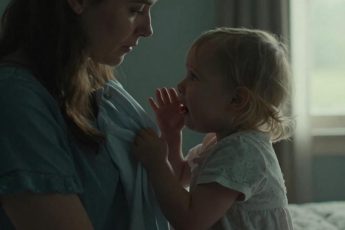
From the very beginning, silence was both my sanctuary and my prison. My mother suffered from misophonia—a condition that twisted ordinary sounds into unbearable triggers, a curse that birthed a terrifying rage within her. For many, it might be the sound of chewing or tapping; for her, it was the fault line beneath our lives, unleashing a fury so fierce it became self-destructive. My earliest memory is not a lullaby or the gentle rhythm of bedtime stories but the pungent smell of a dirty dish towel stuffed forcibly into my six-year-old mouth to halt the sounds of my sobbing after a scraped knee. She later defended the act by saying the noise was unbearable, but to me, that moment etched the blueprint of my childhood—her torment, my silence.
Snoring was a crime in our house. If I dared snore too loudly, she wouldn’t softly wake me but would storm in wielding a blaring sound horn, blasting through my small room until my heart pounded like a drum beneath my ribs. “Negative reinforcement,” she called it—a way to discipline me into better behavior. “You should be grateful,” she insisted, “because you will learn not to do it again.”
On my ninth birthday, her cruelty took a new, chilling form. She presented me with a homemade report card drenched in cold arithmetic—the “Quiet Points System,” a ledger of silence as currency. In the days before, she had labeled every piece of food in the kitchen with sticky notes marked in points: two for bread, three for a piece of fruit, and at least ten for meat. Each quiet act earned points: silence in the shower was three, and an entire night without snoring earned eight. Food was now a prize, earned only through the oppressive control of my silence.
I was just a child, wide-eyed and desperate for her love. Understanding the cruelty beneath the surface was beyond me. Instead, I wrapped my thin arms around her and said nothing, fearful that a single sound might unleash her fury.
Morning light crept in as I meticulously pulled back curtains, careful not to let the fabric whisper against the window frame. At school, I waited until I could silently change in the bathroom to disguise the rustle of my uniform. At home, I vanished into shadows, a ghost navigating a world where noise was taboo and my face wore a mask of grim concentration.
Those efforts earned a glowing mark the next day: +30 POINTS, surrounded by hand-drawn smiley faces and hearts. My mother’s pleased expression was a brittle mask. She opened the fridge, revealing a smorgasbord of meals I could now “afford,” yet my coveted ice cream remained out of reach. I picked the steak.
But the steak was a punishment disguised as dinner—overcooked to a leathery slab, each bite a trial. My mother knew the sound that drove her mad: chewing. She called it ‘deadly.’ I tried to chew slowly, desperately producing saliva, aching to make the meal last without noise. After five grueling minutes, I finally spat the piece into a tissue, deciding emptiness was preferable.
She saw. Her voice shattered the brittle silence. “What on earth are you doing?” she screamed. “A cow died for you today! Swallow it. Now.” Trembling, I obeyed, shoving the cold, mutilated meat back into my mouth—but my tongue betrayed a soft smack against the roof. The sound was her trigger.
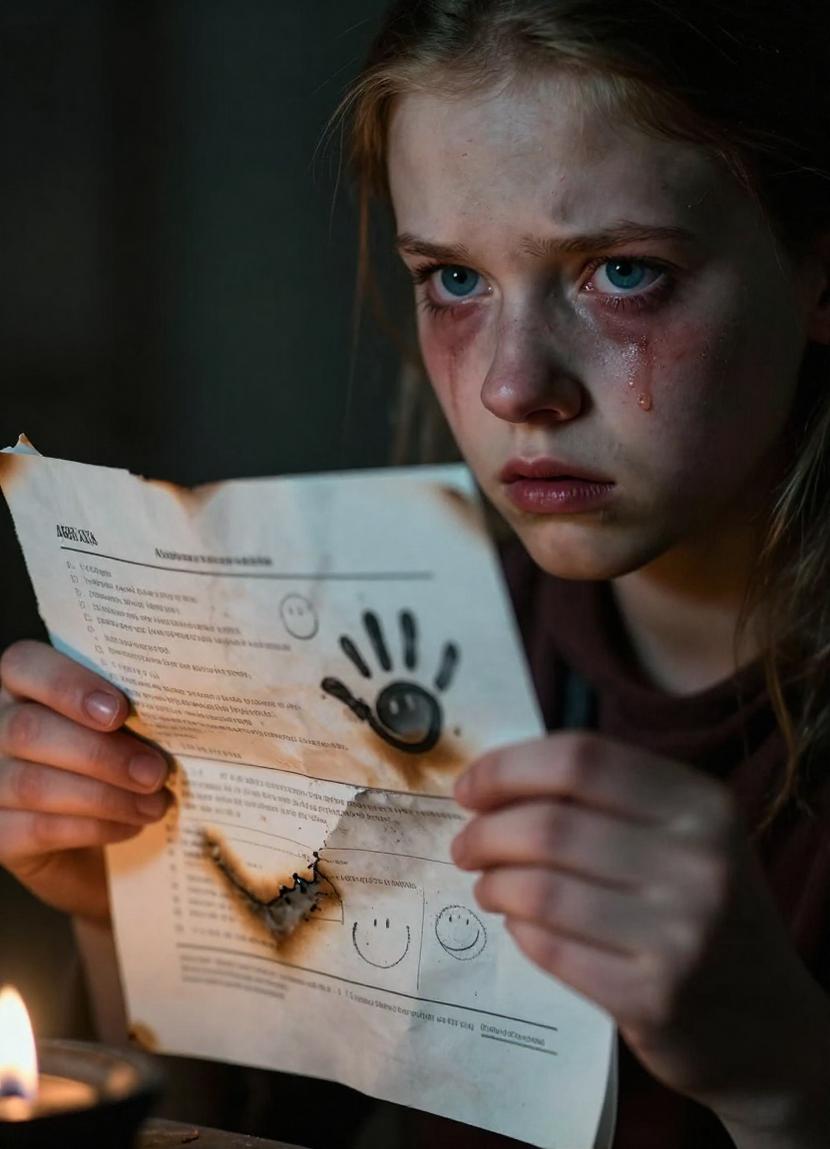
Her fury exploded: fists slammed against the flowered tablecloth, the air thick with rage. “You disgraceful child!” she howled, snatching the report card and burning it over the stove’s flame, the smiley faces curling into black ash. “You think I can’t make you suffer just as you make me suffer? Think again.”
She forced my trembling hands toward the stove, the heat a living terror inches from my skin. The pain was a cruel whisper of her torment. Tears brimmed but never fell—I was too trained to sound or movement. Pain was a silent companion. I retreated on tiptoes to bed, subsisting on nothing but air, my points sunk deeper into the red, forbidding even a crumb.
Three days of starvation stripped me to frailty. I collapsed in class, unconscious for seconds, before a hoarse apology slipped from my lips: “I’m sorry. I didn’t mean to fall so loudly. Please don’t starve me anymore.”
Kind Mrs. Whitaker, the guidance counselor at Maplewood Elementary, scooped me into her safe office, trembling hands pressing a chocolate bar, banana, and granola bar into my grasp. I devoured them, choking on relief. Her ashen face and tear-filled eyes bore silent witness. Without hesitation, she called Child Protective Services.
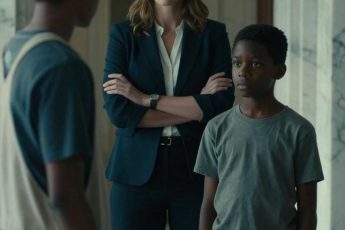
When Ms. Delgado from CPS arrived, I breathed out the nightmare—the Quiet Points system, the steak, the stove—and the school nurse documented my emaciated frame and dark eye sockets. Behind closed doors, my mother donned a practiced mask of concern and denial. “My daughter’s imagination runs wild,” she spun, weaving lies of a rare eating disorder and my supposed need for intense help.
That night, law tied CPS’s hands—they sent me home. My mother had erased all evidence, the point chart, the sticky notes, even stocked the fridge, bristling with fake medical certificates and a façade of normality.
The silence at home was deafening—until she unveiled her “solution.” Noise-canceling headphones and a white noise machine, court-ordered “therapy” for a fictitious sensory processing disorder. The hiss of endless static drowned the world, killing every footstep, every breath—except hers. Remove the headphones, and the threat returned, bolstered by forged doctor’s notes and threats of medical non-compliance.
The headphones became my invisible shackles, a constant pressure that birthed headaches and muffled my awakening senses. At school, I drifted, hollowed and disoriented. Meanwhile, my mother embedded herself deeper into the school, volunteering, surveilling, controlling.
Hope flickered in a math classroom when Miss AJ—the new substitute with sharp, attentive eyes—noticed my desperate tapping: short and long, an SOS in Morse code. Our silent exchange was fragile but real. A note under my art palette later warned me: “Your mother visited my apartment. She knows where I live. I’m sorry.” My sanctuary was breached.
The abuse spiraled. “Family therapy” began with Dr. Kramer, who parroted my mother’s twisted narrative supported by fabricated evidence of me as a volatile, rebellious child. Medications clouded my mind, stifled my voice, and deepened my isolation. Cameras watched my every move; a soundproof padded closet awaited in the basement—a chilling prison.
“Dr. Kramer says you need more intensive intervention,” my mother said, locking me away. Darkness swallowed me whole. Despite my screams, I was suffocated by silence.
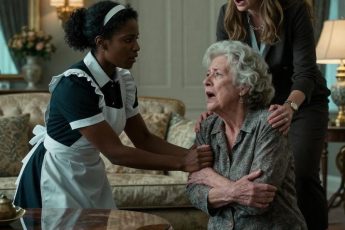
A piercing fire alarm at school shattered the haze, and I crumpled. Awake in the hospital, the sterile beeping was the clearest sound in months. Dr. Lauren examined me, while my mother spun tales of medication hoarding. Yet, amidst the sterile ward, a seed of hope germinated.
An elderly nurse slipped in one quiet night. “I don’t have long,” she whispered, pressing a folded piece of paper into my hand with a number. “There are more of us. Women who know what happens at that clinic your mother’s connected to. We’re scared, but we want to help.”
Desperation mounted, and my mother’s final maneuver was swift and ruthless. At dawn, she dragged me miles to a towering fortress surrounded by imposing walls—Tranquil Hills. Not a healing place, but a warehouse for discarded children, where my room was a sterile cell, the days a murky blur of medicated silence and forbidden voices.
Suddenly, chaos erupted. Sirens screamed as a new nurse burst into my cell. “We have to leave. Now.” Staff shredded files. Outside, police swarmed in, escorting children to ambulances. Mrs. Whitaker was behind the wheel of an unmarked van.
“Miss AJ found the records,” she explained as we raced from that nightmare. “Your mother did this before—to Gabriel. He was trapped there for three years.”
Justice arrived swiftly. My mother was arrested, the soundproof closet and falsified recordings uncovered. Dr. Kramer, complicit in corruption, was taken down. The institution closed its dark doors forever.
I found refuge with my aunt—my mother’s sister—whose warmth was a balm to my shattered spirit. She radiated laughter and encouraged every sound, every gesture of life. The healing was slow; years of conditioned silence did not vanish overnight. There were flinches, whispers to remove nonexistent headphones, but healing grew amid genuine love and patient care.
I learned to speak loud, to fill spaces—and even joined the school choir, daring to reclaim my voice with song. Mrs. Whitaker visited like a guardian angel, bringing cookies and comfort. Miss AJ, a former military intelligence officer, helped me transform my coded trauma into pride. Ms. Delgado watched over from CPS, a fierce protector against the shadows.
The courtroom was my battleground on sentencing day. I stood tall, voice clear, eyes locking on my mother as I unraveled the horrors—the Quiet Points, the starvation, the headphones, the prison closet. Her lies faltered and died under the judge’s stern gaze. “I’ve heard enough. The evidence is overwhelming.”
Convicted of child endangerment, false imprisonment, and conspiracy, she was sentenced to twenty-five years. Dr. Kramer received thirty. Tranquil Hills shuttered. As they led my mother away, her glance was her last attempt at control—I met it with unyielding silence, my newfound strength echoing louder than ever.
That night, my aunt prepared a tender medium-rare steak—the kind she said tasted like freedom. Together, we feasted, laughter spilling into every corner, filling my world with the beautiful, unruly noise of love.
Tenth grade began anew, free from fear. Friends marveled at my joy over simple sounds—a humming hallway, a tapping pencil. My nightmares faded like a bad dream. I learned to trust, to ask for help, to exist boldly in a world that welcomed my voice.
On the one-year anniversary of my rescue, a letter arrived from Gabriel, the boy trapped before me. He thanked me for my courage, for breaking a cycle dark and deep. Now studying social work, he vowed to fight for children like us. I wrote back, telling him of drama club, debates, and the sound of a life reclaimed.
The final cruel irony revealed itself: my mother never suffered misophonia. It was a sinister ruse, a twisted excuse to cloak her cruelty and control. She failed to silence me because I was still here—breathing, speaking, and filling the world with all the beautiful noise she tried to bury.
On my eighteenth birthday, surrounded by friends and chosen family in my aunt’s bustling kitchen, the cacophony of off-key “Happy Birthday” filled the air. Eyes closed, I let the sound wash over me—a symphony of pure, unshackled freedom. I was no longer a prisoner of silence—I was free.