Laura had always dreamed of motherhood—a dream she spoke of even in our teenage years, painting a picture of the perfect mom she wished to be. When Sofia was born, Laura was ecstatic; our daughters, Sofia and Maya, grew inseparable, like sisters bound by countless shared weekends and holidays. Fifteen years later, Laura asked me if I could watch Sofia for a week while she escaped on a solo vacation to Malora. It seemed normal—Laura loved her breaks, and Sofia practically lived at my house anyway.
The first two days passed quietly, filled with typical teenage leisure: Netflix binges, endless snacks, and late-night chats. But on the third evening, a heavy silence settled over my home. I called down for Sofia at dinner—the room stayed quiet. Maya hadn’t seen her since lunch. A knot twisted in my gut. Upstairs, the bedroom door was locked, something Sofia rarely did. I retrieved the spare key, heart hammering, and opened it.
There she was—Sofia lay motionless on the bed, pale and barely breathing, surrounded by empty pill bottles and a folded note. My hands trembled as I dialed 911. Behind me, Maya’s sobs echoed, her voice trembling, ‘What’s happening?’ I had no words; panic eclipsed everything.
The ambulance arrived swiftly. Amid questions from EMTs and frantic texts to a neighbor for Maya’s care, I called Laura. Still lounging at a Malora resort, her voice was distant. Through her tears, I told her what had happened. Instead of urgency, I heard hesitation, skepticism: ‘Is it really that serious? Maybe Sofia’s just seeking attention.’
My world spun. At the hospital, the doctors confirmed Sofia needed emergency treatment—her stomach had to be pumped. I texted Laura again, hoping she’d grasp the gravity. Instead, her reply froze me: ‘Changing flights costs $200. It’s expensive. Nurses can handle hospital visits; you don’t need to be there every day.’
My fury mingled with fear, but Sofia needed calm, so I swallowed my outrage. I took time off work and camped beside Sofia’s hospital bed, nights blurring into a haze of prayers and whispered reassurances. One night, Sofia confided, tearful and fragile, ‘I think Mom doesn’t love me anymore. Why won’t she come back?’ I held her close, hatred for Laura burning silently inside me.
Throughout Sofia’s ordeal, I updated Laura relentlessly. Meanwhile, Laura’s social media overflowed with sun-drenched beach photos and carefree captions: ‘Living my best life.’ The devoted mother I once knew was nowhere to be found.
When Sofia was discharged, I transformed a guest room into a sanctuary where she could heal. My attempts to speak to Laura met cold dismissal, until she finally appeared—tan and refreshed a full day after landing. Her greeting to Sofia was an awkward half-hug before pivoting to questions about her luggage left behind. As I outlined Sofia’s recovery plan, Laura’s eyes hardened. Abruptly, she exploded, accusing me of ‘parenting her child behind her back,’ shouting about boundaries and dramatics. ‘It was probably for attention,’ she spat.
Suddenly, a choked sob came from the hallway. Sofia stood frozen, tears streaming. Laura scarcely looked at her daughter.
‘Are you serious?’ I snapped, fury igniting. ‘You chose the beach over your daughter’s life!’ Laura scoffed, rolling her eyes. ‘Teens are dramatic. You should know better.’
I broke. I called her selfish, accused her of always putting herself first, hinted that Sofia’s worth seemed tied only to a $200 flight change. Laura’s reply was venomous and cold: ‘You don’t understand needing a break from your kids.’ In that moment, everything between us shattered.
Laura grabbed Sofia’s bag and ordered her to leave. Sofia locked herself in my bathroom, sobbing, refusing to go. Laura lost control, yelling about kidnapping, producing her phone to call the police.
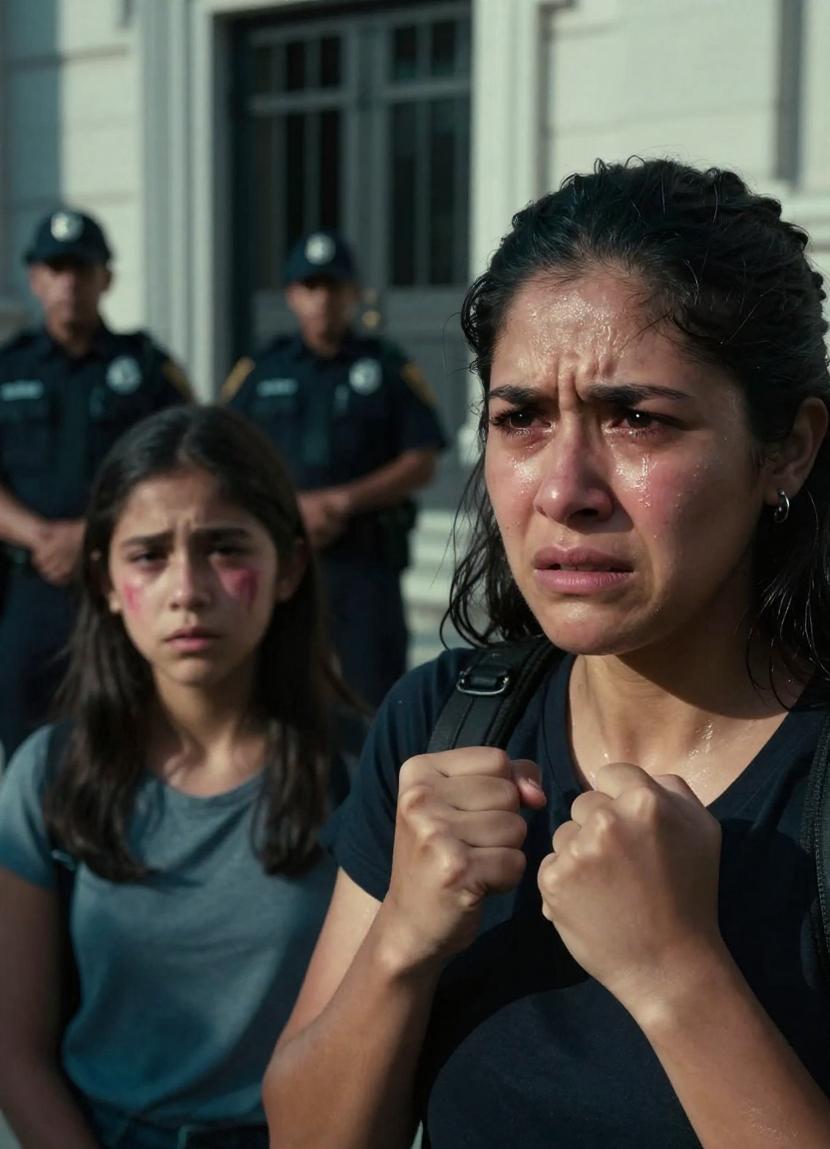
‘Call them,’ I said steadily. ‘Let’s see what they think of a mother who won’t interrupt her vacation during her daughter’s crisis.’ Laura’s fury escalated. She stormed out, returning with two officers minutes later.
She accused me of kidnapping Sofia. I presented Sofia’s discharge papers, trying to explain, but Laura interrupted, spinning tales of obsession. The female officer requested to speak privately with Sofia. After tense coaxing, Sofia emerged—red-faced, trembling. Laura snapped at her, ‘Stop this ridiculous behavior! You’re causing a scene!’
The officers exchanged looks. The female officer invited Sofia for a private talk while Laura paced, loudly accusing me of poisoning her daughter. Maya, quiet until then, secretly recorded Laura on her phone.
After fifteen long minutes, the officers returned. ‘This goes beyond our scope,’ Officer Ramirez said. ‘It’s a family issue requiring professional assessment.’ An hour later, Ms. Ramirez from CPS arrived.
Ms. Ramirez interviewed Sofia alone, then recommended a 72-hour stay in a safe environment for full evaluation. Laura’s face trembled with simmering rage but she begrudgingly agreed. ‘Fine,’ she said. ‘I want some of her things from the guest room.’
Not trusting Laura alone, I accompanied her upstairs. Suddenly, she turned, venom dripping: ‘Think you’ve won? I’ll destroy your life. Sofia is my daughter, not yours. I’ll make sure everyone knows what you really are.’ Unbeknownst to her, Maya recorded everything from the hallway.
That night, Laura unleashed a social media blitz, branding me as unstable and a kidnapper. Friends flooded me with questions and support mingled with doubt. The next morning, while waiting at Sofia’s therapy appointment, Laura barged in, demanding to participate.
‘I’m her mother. I have every right!’ she insisted.
Dr. Castillo calmly asked Laura to speak privately. When alone, Sofia whispered to me, ‘There’s something I never told anyone. Mom was texting a friend, saying she resented being a mother and wished she could leave forever.’ My heart shattered anew.
Shortly after, Dr. Castillo emerged, visibly concerned. Laura stormed out, yelling accusations of bias without a glance at Sofia. Dr. Castillo advised Sofia remain in a stable, supportive environment—namely, our home—temporarily.
Soon after, we learned Laura had filed for emergency custody. But Ms. Ramirez called, confirming concerns and postponing the hearing due to an investigation.
Relief was fleeting. Laura harassed Sofia with guilt and affection, swaying some acquaintances to her side by painting me as a thief of her daughter. One tense afternoon in a parking lot, Paula, Laura’s best friend, began filming us wildly, shouting about ‘parental alienation.’
The 72-hour safety period loomed, and Sofia was unraveling—her worst panic attack yet left her shaking, breathless, whispering, ‘Please don’t make me go back.’
My sister, Isabel, a family attorney, arrived and reviewed our exhaustive records. ‘You did well,’ she said. ‘But family court is unpredictable.’
Ms. Ramirez’s follow-up brought heavy news: ‘I recommend temporary guardianship is granted to you. Laura has hired a lawyer, and a hearing is set for tomorrow.’
Court day arrived. Laura sat with a polished attorney, a smug grin masking tension. Judge Navarro reviewed the files then requested a private meeting with Sofia. Laura’s lawyer objected fiercely, but the judge overruled.
Those fifteen minutes felt endless. Sofia emerged drained, calmer. Judge Navarro made a decisive ruling: temporary guardianship granted to Elena and her family for thirty days amid thorough assessment; Laura granted supervised visitation twice weekly and ordered to undergo psychological evaluation and parenting classes.
Laura’s face flushed with rage. ‘This is absurd! She’s my daughter!’ the judge warned her to control herself or face contempt.
The hatred in Laura’s eyes haunted me as we left. The guardianship was just the first battle.
Laura missed her first visits, showed up at the third smelling of alcohol, and fanned the flames on social media. Sofia’s progress was fragile—one of Laura’s posts could send her spiraling.
Three weeks later, Laura disrupted a therapy session, vandalism appeared on my car scrawled with ‘THIEF.’
Two days before the review hearing, we were blindsided. Laura filed an emergency motion claiming Sofia’s father, Carlos, sought custody—news to all of us.
Isabel explained it as a delay tactic but arranged contact with Carlos. A private investigator found him hours away. He agreed to a video call.
Carlos revealed his side: separated from Laura when Sofia was two, regular visitation until Laura moved away at four. Promises gave way to silence, an attorney’s cease and desist accusing him of harassment, and a box of return letters he’d sent over the years.
‘She told me you left because you didn’t want Sofia,’ Sofia said tearfully.
‘I never stopped trying, Sofia,’ Carlos said gently. ‘I’ve always loved you.’
At the extended hearing, Carlos testified supporting Sofia’s stay with us. Laura’s boyfriend, Diego, shocked us all by testifying Laura confessed to cutting Carlos out and exploiting Sofia on social media.
Laura erupted, screaming lies. The judge extended guardianship for six months with Laura limited to supervised weekly visits.
Outside, Laura hissed, ‘This isn’t over. You turned everyone against me. I’ll get my daughter back.’
Life found a new rhythm. Sofia’s therapy continued, she visited Carlos’s family, and returned to school part-time. Laura attended one parenting class, then vanished. Cyberbullying followed—dozens of cruel texts roasted Sofia’s spirit; a fake profile called her a liar. Police traced the attacks to a burner phone bought by Laura herself. She was arrested for cyberbullying, harassment, and violating a restraining order.
The final custody hearing loomed. The evaluation favored extended custody with us and regular visits for Carlos. Laura’s supervised visits would start after treatment completion. Unexpectedly, Laura accepted: ‘I know I hurt Sofia. I’m committed to changing.’
Afterward, Laura tentatively approached Sofia. ‘I hope someday you’ll give me another chance,’ she said. Sofia nodded stiffly.
That night, Sofia sat on the porch swing. ‘Elena, thank you for saving my life—not just that night, but every day.’ My throat tightened. ‘You did the hard work, Sofia. I’m just glad to watch you grow.’
‘I thought no one cared,’ Sofia whispered. ‘But now I know that’s not true.’
Our journey was far from over, but hope had finally blossomed. Though my friendship with Laura was broken, a stronger bond had forged—a chosen family united by Sofia’s well-being.