When my cousin Isabella humiliated my son, Leo, right there in front of everyone, something inside me shattered. Leo, my bright, beautiful boy with autism, was the victim of a cruel public spectacle, and I knew we couldn’t stay. We left quietly, but Isabella’s retaliation came swiftly—a devastating call to Child Protective Services, attempting to rip Leo from my arms. What she didn’t realize was how fiercely I would fight back, and how quickly the tables could turn.
It all began months earlier when Isabella announced her engagement. The first person I told was Leo, whose semi-low functioning autism often meant invitations were few and far between. Many friends or acquaintances deliberately excluded him from events. But family felt like a safe harbor, a place where Leo’s joy wouldn’t be a burden.
When I shared the news, Leo’s face lit up with pure, childlike delight. His little body bounced with excitement. “Really, Daddy? Really? I can come?” he asked, eyes sparkling. I gave him the brightest “Yes!” I could manage, and we danced around the living room, twirling and laughing—his elation infectious.
As the wedding rehearsal approached, I prepared Leo with gentle reminders. “Remember, Leo, we keep quiet during the ceremony. It’s Isabella’s special day, but your happiness is important too.” He nodded earnestly, so I felt hopeful.
But halfway through that rehearsal, as Isabella reached the altar, the atmosphere shifted. Without warning, she stopped and snapped, ‘What is he doing here?’
My chest tightened. I met Leo’s beaming gaze—he was blissfully unaware she meant him. A heavy silence dropped over the church. Then Isabella lunged at her groom with a vindictive scream. “I told you he shouldn’t have come!” she spat, pointing accusatorily at Leo. His smile melted, tears shimmered beneath his lashes as panic rippled through the room.
The murmurs around us were stinging. Some faces wore pity or disgust, but most sides with Isabella, as if Leo’s quiet joy was a scandal. I fought the urge to scream, to lash out, to end her cruelty with fire. Instead, I rose, took Leo’s trembling hand, and we left, holding tightly to each other.
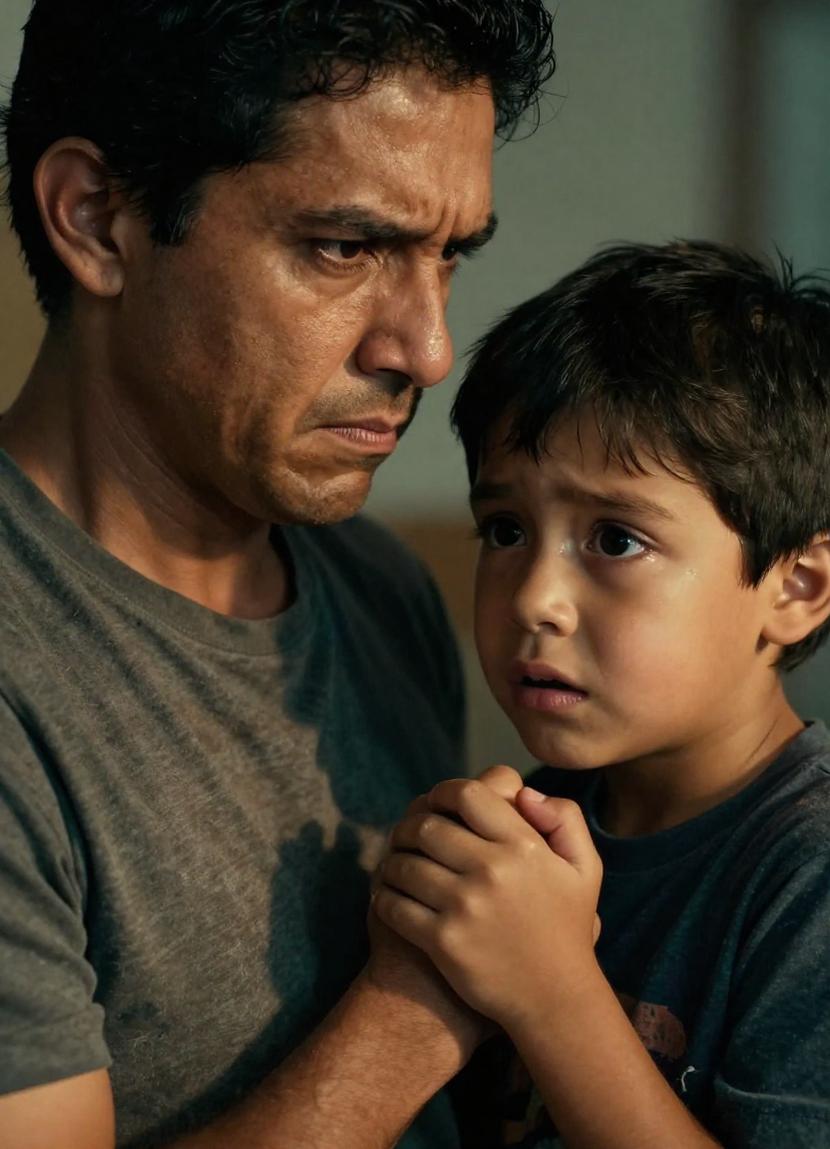
Outside, Leo’s tears flowed freely. ‘Why would she say those things, Daddy?’ he sobbed. I hugged him fiercely. “Some people are hurting inside and don’t know how to be kind,” I whispered.
Two days later, at the real wedding, Leo stayed with a babysitter, trusting that the rehearsal mishap was the main event. I was determined to not let Isabella’s bitterness ruin the day. When dinner arrived, I raised my glass and spoke, silencing the chatter.
“I’m here without my wonderful son, Leo,” I said, firm and tender. “Many didn’t want him here, but he asked me to share a message.” On my phone, I played a recording of Leo, his voice sweet and hopeful, wishing Isabella happiness. A swell of emotion swept through the room; some wiped their eyes, but Isabella’s glare burned cold. Her quiet fury was storming.
That night was calm before a devastating storm. Less than 24 hours later, an urgent knock startled us. It wasn’t Isabella—it was Carlos from Child Protective Services. His arrival unleashed a whirlwind of inspections and accusations.
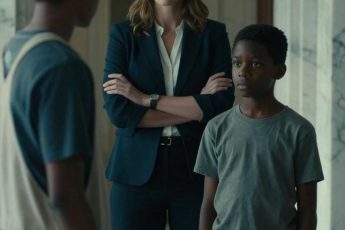
Every detail of Leo’s care was scrutinized—the mattress on the floor, the plastic covers protecting furniture, cupboard locks—all labeled ‘evidence’ against me. My protests about Leo’s autism were met with skepticism, whispered dismissal. Soon, they informed me of an emergency removal order, intending to place Leo with a relative. I suggested my mother, knowing she’d care for him with all her heart.
The next 72 hours were a torment of anxiety and fury. I was certain Isabella orchestrated this nightmare, turning exclusion into a battle to take Leo forever.
I didn’t allow despair to consume me. I gathered every scrap of evidence—medical records, therapy notes, school IEPs, testimonies. Dr. Rivera, Leo’s fierce developmental pediatrician of five years, promised a strong letter and courtroom testimony. Sophie, my neighbor and special education teacher, stood ready with a character reference. Gabriela Morales, a relentless family lawyer, promised to fight with all her might.
The community rallied in quiet support. At school, Ms. Blake, the principal, vouched for the devoted father she saw every day. But beneath the surface, Isabella’s poison spread. She whispered lies to family members, including Clara, who naively accepted Isabella’s narrative of neglect and chaos.
Daniel, Isabella’s new husband, reached out privately, insisting he hadn’t been involved in the accusations. His unexpected alliance gave me a flicker of hope.
The court hearing was a battle of truths. Gabriela dismantled Isabella’s story piece by piece. The recorded voice of Leo, full of innocence and joy, spoke volumes. Dr. Rivera’s expert testimony illuminated the careful accommodations I’d made for my son’s unique needs.
Isabella’s claims twisted reality, accusing me of mistreatment that never happened. Gabriela exposed her motives—calls made in retaliation, a selective memory of events. Judge Martinez listened carefully, weighing the evidence.
After a tense recess, he ruled in our favor—dismissing the emergency removal and ordering Leo’s placement with my mother, granting me unlimited visitation. It was a victory, but I knew the fight was not over.
Isabella’s parting words were a venomous promise: “This isn’t over.”
Leo returned to my arms, cautious but relieved. That night, after he whispered of bad dreams and fears of being taken again, I vowed I’d shield him forever.
Then came the unexpected twist—a mysterious text led me to a secret video from the wedding reception. It showed Isabella conspiring with guests, sending messages just minutes before the CPS call. Daniel confirmed the truth behind the scenes; Isabella’s vendetta ran deeper, involving deceit and manipulation.
A compassionate home visit from Dr. Santos offered a balm to our battered spirits. Her glowing report reaffirmed the safe, nurturing environment I’d created for Leo.
But Isabella’s desperation continued, spitting more falsehoods, attempting to undermine my love and care.
The family tore apart behind closed doors until a decisive gathering called by my mother brought everything into the light. Confronted by family witnesses—including a bridesmaid revealing Isabella’s own outburst—the truth drowned out lies. Daniel stood by me, exposing Isabella’s coercion and deceit.
Faced with a united family, Isabella and her parents left, swallowed by their own disgrace.
In the weeks that followed, love bloomed where suspicion had reigned. Relatives reached out, embracing Leo with open arms and eager hearts. The isolation Isabella tried to impose dissolved into a community of support.
Months later, at a bright family barbecue, Leo’s nervousness gave way to wonder as Tía Rosa’s daughter invited him to play. Watching him frolic among cousins, bathed in sunlight and laughter, I felt a joy I never thought possible.
Daniel handed me a beer, nodding toward my son. “He seems happy.”
“He really is,” I whispered with a full heart.
Through the storm, we had forged something unbreakable. Leo was no longer just my son—he was a beloved part of our family, and together we had become stronger, kinder, and more united than ever before.