An intense, suffocating silence settled heavily over the crowded courtroom, so complete it felt as if every breath was stolen in unison. For a moment frozen in time, the air hung thick with anticipation and disbelief.
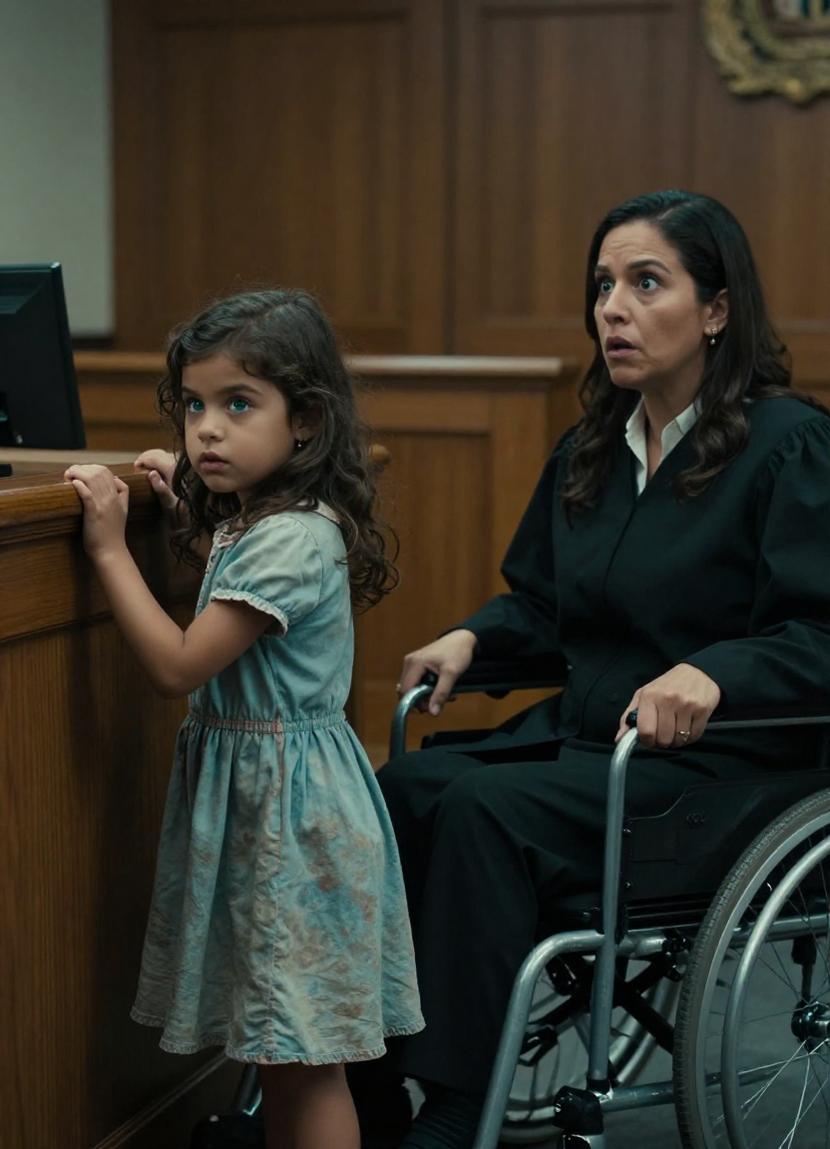
All eyes locked onto a solitary, fragile figure advancing slowly toward the front—a tiny five-year-old girl, her tangled brown hair wild and uncombed, like a small storm caught in a sea of silence.
Her worn little shoes whispered sharp against the glossy wooden floor, clashing with the gravity of the scene. The faded, oversized dress she wore engulfed her delicate frame, a stark contrast to the innocence carried in her bright eyes.
Elevated behind the grand wooden bench sat Judge Catalina Morales, confined within the rigid embrace of her wheelchair—the cage that had held her captive for three long, soul-crushing years. Her white-knuckled hands gripped the black leather armrests, a silent testament to battles fought beyond the law.
In her twenty years of presiding over the bitter battles of humanity, Catalina had never witnessed a child so young step forward in a felony trial. The entire room watched breathlessly as the little girl halted, looking up with eyes of shimmering emerald, glowing with a fierce, almost miraculous hope.
Drawing a shaky breath that filled her tiny chest, she pressed trembling hands against the polished wood and spoke with startling clarity that echoed to the farthest corners.
“Judge, ma’am,” Isla said, her voice small but unwavering, “if you set my daddy free, I promise I’ll make your legs work again.”
The courtroom exploded—gasps piercing the heavy silence, uneasy laughter bubbling up before hushed murmurs spread like wildfire. Fingers pointed in disbelief, heads shook in pity, convinced this child’s words were the fanciful whispers of innocence crushed by a cruel reality.
Yet Judge Catalina Morales did not laugh. Her eyes grew wide, locked onto Isla’s fierce gaze. Deep within, beneath years of hardened resilience, a flutter stirred—an emotion long buried beneath pain and loss.
To unravel this impossible moment, one must travel back to the beginning of this heart-wrenching tale.
Three weeks prior, Miguel Rivera was an ordinary man, drenched in sweat and determination, struggling to keep life afloat. A devoted construction worker and fiercely loving single father, Miguel’s world revolved around his daughter, Isla.
His days were ritual: rising before dawn, preparing whatever breakfast he could muster, pressing a kiss to Isla’s forehead before braving the gruelling day ahead. Since losing his wife when Isla was two, Miguel had stood sole guardian in a relentless sea of challenges.
Isla was no ordinary child. Severe asthma etched every cold season with terror, transforming nights into battles for air. On those darkest hours, Miguel cradled his daughter close, rocking and singing soft lullabies until the suffocating grip of panic slowly loosened.
Yet the medicine she needed was exorbitant—an expensive lifeline that drained every penny Miguel earned. He pushed himself to exhaustion, working every shift, sacrificing every moment, but the wages barely kept shadows from creeping into their small home.
He had sold everything valuable—his car, his watch, even the treasured wedding ring that linked him forever to his late wife—all gone to cover Isla’s treatments.
Then came that chilling Tuesday morning.
Isla awoke to a fierce fever that blazed beneath her fragile skin, her green eyes heavy with pain, her small frame weak and limp. When Miguel touched her brow, dread drenched his soul like icy waves.
“Daddy,” Isla whispered, voice thin and rasping like a fragile thread, “I can’t breathe well.”
His heart shattered. He saw the blue creeping into her lips, the trembling of tiny hands. No medicine. No money. The cruel reality tightened its grip.
The pharmacy was merciless—no cash, no relief. The hospital doors barred by lack of insurance. Desperate, Miguel called his boss, Mr. Delgado, begging for an advance.
“Miguel, I’m sorry,” came the cold reply, “company policy won’t allow it. You know that.”
The call ended. Miguel sank to his knees beside his daughter’s bed, watching helplessly as her breaths grew shallow and labored. Without her medication, Isla might not make it through the night.
That evening, after she drifted into restless sleep, Miguel faced a gut-wrenching decision—the kind a father never wants to make.
Clad in his worn jacket, he kissed Isla’s fevered forehead and stepped out into the biting night.
Under the harsh fluorescent glare of the bustling pharmacy on Cedar Lane, families stocked up on seasonal remedies while elderly patrons retrieved prescriptions. Teenagers shuffled by indifferent to the unfolding crisis.
Miguel waited outside the automatic doors agonizingly, every second gnawing at his resolve. His hands trembled—not from cold, but raw fear and desperation. He was a good man, a man with only love for his daughter, never a thief.
But Isla’s fading breath pushed him beyond every limit.
Tipping his baseball cap low, Miguel crossed into the sterile, unforgiving light—a father on the edge of breaking the rules to save the only world he had left.
And now, in the courtroom, the tiny Isla’s words defied reason and pierced hardened hearts. “If you free my daddy,” she promised with the purest conviction, “I will make your legs work again.”
And in Judge Catalina Morales, something long dormant stirred—a fragile hope tinted with the innocence of a child’s faith.