My name is Ethan, I’m 29, and until last year, I believed I understood family—not the sugar-coated fairy tale version, but the gritty, complex kind that demands sacrifice, sometimes without thanks. I was always the quiet middle child, the one who kept the household turning behind the scenes, the one who mailed flowers on birthdays and covered every crack that others ignored. But somewhere along the way, I realized I was the invisible backbone of a family that never truly saw me. This realization crept over me like a silent decay beneath the floorboards—unnoticed until everything shattered.
Growing up, I was sandwiched between two worlds: Aiden, my older brother, the golden boy—captain of the football team, endlessly charming, effortlessly surrounded by admirers. And Maya, the youngest, a princess wrapped in privilege from day one. Then there was me, Ethan: the decent grades, the scholarship recipient, the steady hand who quietly earned his place. I didn’t expect to be the one shouldering the family’s burdens.
After college, I poured my soul into building a small IT business. The first three years were brutal—endless nights fueled by instant noodles and caffeine—but eventually, something clicked, and my company took off. Yet, when I was struggling, my family remained silent. The moment money flowed, I was magically family again.
It started with small favors. Dad asked for help with Aiden’s car payments, just until he got promoted. Then Maya’s elite college tuition came up — apparently, financial aid wasn’t enough. Roof repairs, heating system fixes, kitchen remodels—an endless carousel of demands spun around me. And still, I’d get texts like, “Can you cover groceries this week?”
At first, I convinced myself that I was building a legacy, that I was the quiet hero saving our family. But the cold indifference and entitlement began to erode me. They expected, never appreciated.
Thanksgiving was my breaking point. I hosted for the first time in my new home—catered, beautiful, fire pit glowing on the patio. Everyone showed up, but no one offered help, no one cleared a dish. Aiden toasted to family unity, never once acknowledging I paid for everything. Maya ignored almost everyone, glued to her new boyfriend. Dad grumbled about how easy kids have it today.
I smiled through it all, but inside, the fracture grew.
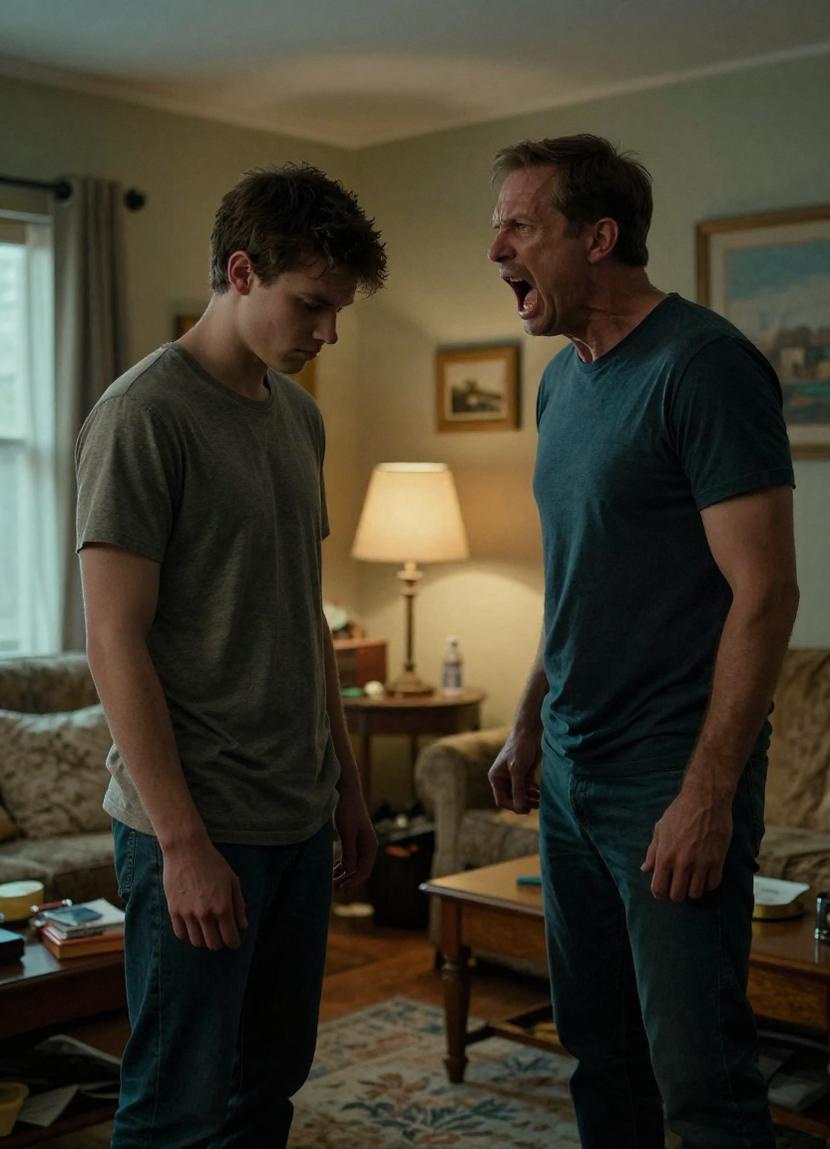
Two months later, I came home drained from a long meeting. My phone buzzed—a voicemail from Dad. Expecting a gentle reminder about money, I braced myself. Instead, his voice came sharp, slurred with bitterness: “All you do is take. You’ve never given this family anything worth remembering. If you have any pride, leave.”
My heart stopped. I replayed the message, unable to believe the venom in his words.
No yelling, no calls back. I just stood silently, gazing out at the city lights I once loved, feeling that quiet snap inside me—the final break.
That night, I packed a bag and left. No drama, no goodbyes. A single email to my assistant: “Pause all recurring family account payments immediately.”
I disappeared.
Days slipped by—no calls, no messages. Nearly a month later, Maya called, voice trembling: “Ethan, the tuition payment didn’t go through. What’s going on?”
I replied once: “Thought I never gave this family anything.”
Silence filled the space after that. Calls flooded in from Mom, Aiden, even Dad, each urgent, demanding, but no apologies—just clipped demands disguised as concern.
I escaped to Clearwater.
In Clearwater, the slow silence was a balm. I wandered through quiet coffee shops, journaling my unraveling life. I rented a car, drove up to Riverside, and hiked alone where the wind sliced clean through the trees. I remembered Maya’s Cancun call about her lost wallet—the emergency cash fiasco. Standing on the cliff overlooking the valley, I laughed, a raw sound that echoed into the void.
Weeks passed before Mom’s email pierced the quiet: “We need you home.” It was filled with accusations and desperation—no warmth, only the weight of hollow expectations.
But family doesn’t abandon family? They had. Every forgotten birthday, every silent excuse, every demand without thanks—they cloaked it all in tradition.
I didn’t reply. Instead, I forwarded her message to my lawyer, Dominic, instructing him to redirect Maya’s remaining tuition funds to scholarships for deserving first-generation students. I asked Dominic to check the deed to the pine cottage, which I had fully paid off under false pretenses. To my surprise, my name was still on the documents.
So I made a choice. I booked a flight home—not for reconciliation, but reclamation.
I slipped into the house unannounced. Voices floated from the living room.
“He’s just being dramatic,” Aiden sneered. “He’ll come crawling back.”
“I don’t get why he’s doing this—it’s not that much money,” Maya whispered.
Dad’s grumble cut through sharply, “Ethan’s always been the weak one—hiding behind his computer like money’s gonna save him.”
I stayed in the shadows, feeling the sting but no anger—just cold confirmation. They never truly saw me.
Quietly, I left and drove to the pine cottage. Photos lined the walls—none included me. I began snapping shots for the sale listing.
Then I sent one last message to the family chat:
“You said I never gave this family anything. So here’s your gift: distance. No more tuition, no more car payments, no more repairs. Sell your own memories. I’m done.”
I blocked them, severing every thread.
Over the Pacific on a flight to Tokyo, my phone exploded with missed calls and frantic voicemails—from Maya’s friends pleading, Dad’s messages unraveling from threats into desperate fragments. “You’re still our son.” I laughed bitterly and ignored them.
Tokyo gave me peace—clean, anonymous. For the first time, I was just Ethan, not their fixer or fallback.
Two weeks later, I unblocked Elena, my cousin. Her message was simple: “When you’re ready, I’m here to listen.”
Back home, she revealed Maya had created a fraudulent online plea portraying me as unstable, abandoned and cruel, raking in nearly $6,000 from strangers.
That night, I dismantled the narrative quietly—posting indisputable proof of every penny I’d given Maya in a private online album. I left a single anonymous comment on her fundraising page:
“Before you donate, maybe ask where the other $90,000 went. Some forget who helped them once the help stops.”
Within a day, her post was taken down amid accusations of suspicious activity.
Then came the legal battle. Dad’s formal letter demanding a family meeting over the “breakdown” and his alleged “emotional equity” in the pine cottage was met with Dominic’s cold reply—copies of signed agreements where Dad renounced any claim.
That was quiet humiliation, but not the end. News leaked I intended to sell the main house too—property I’d saved from foreclosure years ago with an $80,000 loan they never repaid. A lien was filed; an auction set.
The day of the foreclosure, I watched from across the street. My family arrived in Dad’s old Chevy, all worn and defeated.
“Ethan, you’re really doing this?” Dad spat. “Humiliating your family over a grudge?”
“It’s not a grudge,” I answered steadily. “It’s a pattern. And it ends now.”
Maya’s voice cracked. “I’m going to lose my scholarship. Why are you doing this to us?”
“I paid for your first three years,” I said. “Never once a thank you. Instead, you lied to strangers for money. Now you want sympathy?”
Her face crumbled. Mom whispered, “Families don’t do this to each other.”
“No,” I said firmly. “Families don’t take like this. You took my time, my money, my trust. And when I stopped, you called me selfish.”
The auctioneer’s voice rang out, final and indifferent. They stood rooted, powerless—and I walked away.
Months later, Maya sent an email: “I don’t expect a reply. I get it now. I’m sorry.”
I read it twice, then archived the message. No bitterness. Just peace. For the first time ever, that was enough.