In the heart of a strict Hispanic household, my world was painted with an unrelenting shade of colorism. Madre held a rigid doctrine: the lighter your skin, the higher your worth. Summers were battles; Marisela and I, playing freely outdoors, were relentless targets. Madre’s hawk eyes monitored every step outside the comforting shade—not once, but counting each moment, punishing each with the crack of her slap against my cheek. A cruel ritual stitched into my childhood.
Our mornings were ceremonies of humiliation. Madre smeared a pungent, acrid skin-whitening cream from the local Dollar Tree across our bodies—a cheap, toxic promise of acceptance. The lighter we appeared, the sweeter her affection. Deep inside, I yearned for a simple childhood—to run under the sun without dread, to embrace myself as I was. But Marisela? She went beyond that. She transformed into a chilling emblem of Madre’s twisted ideals, a “whitewashed queen” obsessed with erasing every hint of her natural beauty.
Each night, Marisela set alarms to tear her from sleep every two hours, convinced that exhaustion would render her paler. Instead of worrying, Madre and Padre lavished her with dazzling dresses and sparkling jewelry—a cruel reward for self-annihilation. The unspoken truth became clear: Marisela was the golden child. To win their love, I’d have to follow her path.
I tried other ways—top grades, scrubbing the house until it gleamed, even massaging Madre and Padre’s tired feet—but their praise was a cold slap. “Thanks, honey,” they’d say, “but if only you worked as hard at being as beautiful and pale as Marisela.”
My sixteenth birthday was a nightmare sealed in a box: a hair-bleaching product shipped from overseas, a symbol of their expectations. I wept, clutching my teddy bear, hoping for solace. Marisela entered, eyes glassy with a zeal that chilled me. ‘Liana, I love you,’ she whispered, ‘and I want to help. Look at me.’ I saw the withered shell she had become, her scalp scarred from years of chemical torture and her eyes hollow. ‘If I can look this beautiful,’ she assured me, her voice both tender and eerie, ‘so can you.’
I yielded, but only superficially. I draped myself in foundation two shades lighter, cowering beneath layers to fake the image they craved—not out of self-hatred, but a desperate hunger for their love.
Fast forward six years: I had just conquered my degree at the University of Florida. I blossomed outside, fully owning my skin’s natural glow, and Diego, my steadfast boyfriend, loved me for who I was. Half Puerto Rican, half Italian, he understood the scars of internalized racism. Yet, I clung to a fragile hope that my parents might one day see me clearly.
That hope shattered like glass the moment we arrived for Thanksgiving. The door swung open to reveal Marisela—not the vibrant sister I remembered, but a ghost: skeletal, pale, eyes cavernous. My heart shattered for her—and stealing a breath, she cried, horrified, ‘Dios mío! What have you done to our bloodline?’
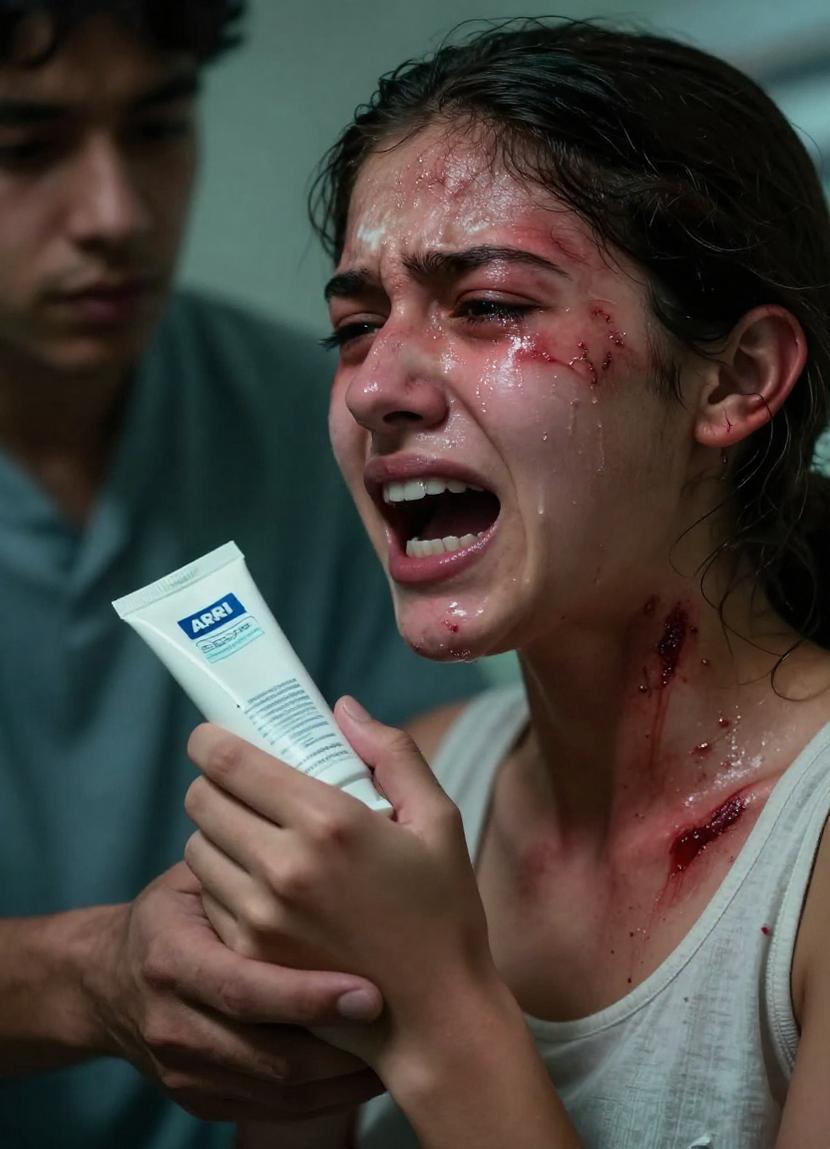
Diego tightened his grip on my hand, a silent shield. Madre stormed forward, fury twisting her face as she lunged, clawing at my slicked-back bun. At the sight of Diego, her mouth contorted into an icy, manic laugh. “You almost had me fooled—this… person… your boyfriend? Just a phase.’ Padre yanked me inside and thrust a tube of a new whitening cream toward Marisela. This wasn’t the old, familiar poison—it burnt with cruel fire.
‘Stop! Stay away!’ I screamed, tears and searing pain streaming as angry blisters erupted, flesh peeling like paper. Diego was already dialing emergency services as Padre tried ripping the phone away, shouting, ‘Pain is beauty! She must become beautiful!’
By the time paramedics arrived, my eyebrows had dissolved into scar tissue. Waking in a sterile hospital room, bandaged like a wounded soldier, I found solace only in Diego’s gentle kiss and whispered reassurances. My phone buzzed relentlessly—dozens of voicemails clung to the darkness. From rage to threats, until finally, Marisela’s voice trembled, begging me to drop the charges. ‘They’re our parents,’ she whispered, hollow and defeated. ‘They only want what’s best. Please, come home.’
Diego’s voice cut through the fog, steady and clear: ‘Liana, this is abuse. It’s been abuse all along.’ His words ignited something long dormant—courage to fight a lifetime of twisted love.
The hospital’s social worker stood by my side as I filed the police report, hands trembling like fragile leaves. Officer Morales met my gaze with tired compassion. “You’re doing the right thing,” he said softly.
Days later, nestled in Diego’s modest apartment, I let the dam break, crying until there was nothing left. The parents’ denials came swiftly, spinning tales of allergies, and Marisela, trapped in their web, painted me unstable, a liar.
Hope dimmed—until a text from an unknown number flickered alive. Julieta, a college friend, sent photos: chemical burns cradled on my neck, love shaped by silence and betrayal.
That same week, victim advocate Leticia called with revelations that would fuel my fire: the cream contained illegal levels of hydroquinone and mercury, a dangerous cocktail banned in the US. But then came her unsettling words—Marisela sided with Madre and Padre, claiming my story was fabrication.
Fueled by exhaustion and heartbreak, I took a chance. I called Marisela. Her voice was a fragile whisper: ‘Liana, drop this. They’re furious—Padre broke the coffee table yesterday.’
‘They’re hurting you still,’ I pressed, voice trembling. ‘When did you last sleep peacefully?’
Silence stretched until, ‘I don’t know how to be any other way.’
‘Neither did I,’ I confessed. ‘But I’m learning. You can too.’
Days later, Tía Carmen called. Madre had spun more lies, but Tía Carmen’s voice broke with long-buried truths. ‘I’ve always suspected. When Madre was our age, our abuela did to her what she does to you—forcing European standards through pain and obsession.’
This ancestral pain didn’t erase the wounds but illuminated the generational poison we were entangled in.
One chilly afternoon, leaving a dermatologist’s appointment, I spotted Marisela in the parking lot, her figure fragile and haunted. She pressed a small USB drive into my hand, whispering urgently, ‘They know I took the drive. It contains years of financial records—proof of their dark trade in illegal skin bleach.’
That night, as Diego cooked and settled Marisela on an air mattress, her bruises whispered stories of abuse. ‘Padre grabbed me,’ she said, voice numb. I snapped photos—evidence for the battle ahead.
With Marisela’s testimony and the documents, the DA charged Madre and Padre with abuse, endangerment, and smuggling banned substances. The day of their arrest, Marisela sobbed with relief. ‘It’s really over.’
The months blurred—court dates tangled with therapy sessions. Our parents, out on bail, stalked with digital ghosts, banned from contact yet relentless. Each violation was recorded.
The trial arrived amid freezing winds. Madre took the stand, draping herself in false tenderness. ‘I only wanted what was best,’ she said, her voice a poison-laced lullaby. ‘In our culture, lighter skin opens doors. Beauty requires sacrifice.’
Padre played the stern protector, but photographs of my burns and Marisela’s scars unraveled their facade.
Their attorney twisted truth, accusing me of jealousy toward Marisela’s “natural beauty.” Calm and resolute, I answered, ‘I’ve never envied her beauty, only her willingness to sacrifice herself to earn their love.’
Marisela’s testimony broke through walls, her fragile form masking a fierce voice. ‘I thought the pain was normal. I thought all parents hurt their children like this—until I saw Liana healing and understood the cruelty we endured.’
Three days later, the verdict echoed: guilty on all counts. Tears streamed—relief renewed.
Life reclaimed its pace. I pursued psychology, driven to heal others as I healed. Marisela embraced art therapy, a path of redemption. Diego and I deepened our bond; on my birthday, one year after the nightmare, he proposed—I said yes without hesitation.
Two years later, the past moved on: Madre and Padre released on parole, silent and distant. Tía Carmen kept me grounded.
Three years from the ordeal, Diego and I wed in a park surrounded by light and hope. Marisela stood proudly as maid of honor, healthy, radiant with loose curls. My scars bore stories no longer hidden, etched into my skin as symbols of survival.
As we danced, the imperfections of our past mingled with the grace of our present. This life, forged through pain and love, was ours—raw, real, and fiercely beautiful.