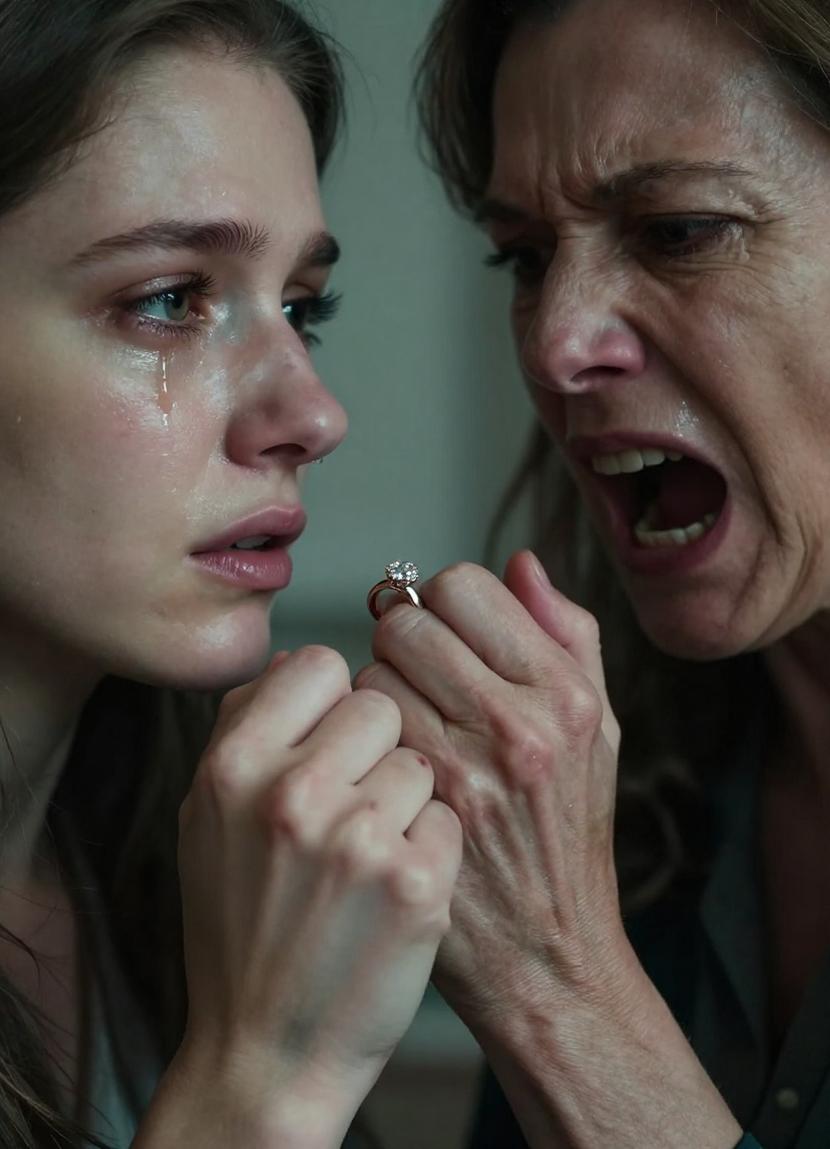
Christmas dinner was meant to be a celebration of new beginnings—a moment of unity, joy, and hope. But for me, Isla, it marked a shattering end. The room, once warm with holiday cheer, suddenly froze as my mother’s face twisted into a fury so raw and primal, it was almost unrecognizable. Without warning, she lunged for the delicate band nestled on my swollen finger, yanking at my engagement ring with a desperation that sent waves of shock through everyone present.
“You feminist witch,” she spat venomously, her voice low, guttural, dripping with contempt. “You’ve destroyed everything I taught you.”
Before I could grasp what was happening, Lucas, my fiancé, stepped forward, voice trembling but resolute. “Please, stop. This isn’t right.”
But she was beyond reason. Whirling on him with wild eyes, she screamed, “You destroyed my daughter! She was supposed to be pure!”
That night, eight months ago, tore apart the fragile thread holding my family together.
To understand how we spiraled to this moment, you need to know my mother. She is the embodiment of backward thinking, a woman imprisoned in the prejudices of a bygone era.
From the moment my sister, Sofia, and I could speak, our lives were dictated by her iron rule—her unyielding curriculum on becoming the perfect wife. It was no gentle guidance; it was a daily regimen as rigid as it was merciless. We honed our steps by balancing books on our heads while carrying trays heavy with food. One spilled drop, and punishment awaited: scrubbing the entire kitchen floor on our knees with a toothbrush until our hands bled. Our bedtime stories weren’t fairy tales or adventures but incessant rehearsals of phrases like, “Whatever you think is best, honey,” and “I’m sorry for speaking out of turn.” Each sentence left a crawl of disgust on my skin. Sofia thrived under their weight, becoming the prized apprentice in our mother’s disturbing vision of womanhood.
By fifteen, Sofia was ironing her boyfriend Darren’s shirts every morning, packing his lunches with notes dripping in self-effacement: “I exist to make you happy.” My mother beamed with pride, rewarding this devotion with a $300 KitchenAid mixer. It was as if she was crafting an obedient doll, never daring to question the relentless submission she demanded.
Though I despised my mother’s ideology, a fractured part of me clung to the hope that I might earn her approval. I threw myself fiercely into school, chasing achievement with desperate zeal: top grades, overflowing extracurriculars, a wide web of friendships, and teachers who delighted in praising me. When my acceptance letter to Northwestern’s prestigious business school arrived, I presented it trembling, heart bursting, to my mother. Her response was a flat, cold dismissal: “Congratulations, honey.” Then she coldly tore it up and tossed it in the trash, muttering, “I wish you put this much effort into finding a good man to take care of you.”
The final fracture came a week later when I found Sofia collapsed on the couch, a dark bruise blooming beneath her eye, barely masked by cheap concealer. Her brittle laughter chilled me when I asked about it. “Oh, this?” she said lightly, tracing the bruise. “Darren just gets carried away. It’s sweet, actually. Means he loves me so much he can’t control himself.” In that moment, I recognized the poison our mother had injected into Sofia’s soul, and I mourned the sister I’d lost.
If this was what my mother wanted, then at least I would try—just once—to make her happy. That summer, I dated Malik, the worst man I could find. He controlled me with jealous eyes, scrutinized every message on my phone, dictated who I could see, and demanded my location 24/7. It was a nightmare masquerading as a relationship, but when I introduced him on the Fourth of July, my mother’s face blossomed with approval, and for the first time in years, she hugged me.
Four years later, I had earned my finance degree, survived months of therapy untangling the knots of my past, and found Lucas. The oldest of three younger sisters, he cherished me like a queen, listening with intent, making me laugh, planning every date with thoughtful care. He was everything my mother despised: a partner, not a master.
As Christmas approached, a rare flicker of hope ignited inside me. Maybe my family would finally witness the happiness Lucas brought me. “It’ll be okay,” he assured me. “She’ll see how good he is for you.” For a fleeting moment, I believed him.
When I knocked on the door, my chest swelled with newfound confidence. Sofia opened it, a ghost of her former self; fresh bruises peeked beneath her makeup, and a subtle limp betrayed her hidden pain. My heart cracked for her. But the fragile peace shattered when Sofia’s gaze hardened upon Lucas, her sneer cutting through the room. “Oh, Isla,” she mocked loud enough for the family to hear, “you’re emasculating him in public.”
Lucas introduced himself quietly, mentioning how proud he was of my recent promotion. That was when mother’s mask slipped, revealing a fury that set the room ablaze.
“A real man doesn’t let his woman outshine him!” she hissed, seizing my wrist with bruising strength. Then her eyes locked on my engagement ring—bright, defiant in the light. Her voice dropped to a venomous growl: “You feminist… witch! You’ve destroyed everything I taught you!”
And then she tried to wrench the ring from my finger.
Sofia, shackled by upbringing and loyalty, grabbed my shoulders, pinning me in place as mother yanked and twisted mercilessly. Pain exploded through my hand, my finger swelling into a grotesque purple.
Lucas sprang into action, dialing 911 while pulling desperately at them. My mother’s crazed strength was terrifying, but then she abandoned her grip—only to snatch a kitchen knife from the block and lunge at Lucas.
“You’ve destroyed my daughter!” she screamed, eyes wild and unhinged. “She was supposed to be pure!”
Chaos erupted in a torrent of screams and flashing sirens. Paramedics arrived to cut the ring from my shattered finger, leaving me bleeding but burning with cold fury.
I was building a future with Lucas, and I vowed no one—least of all my family—would stand in our way.
I blocked every number—mother, Sofia, even distant relatives likely to carry messages. Lucas helped me reset passwords, install new security measures. For a while, silence was our only companion. Then the harassment began.
Margaret, my boss, called me into her office. My mother had flooded workplace lines, claiming I stole family heirlooms and was mentally unstable. I showed Margaret the police report. She sided with me but warned the disruptions threatened my career.
Mother escalated brutal tactics. One Saturday, police pounded our apartment door—this time, a wellness check spurred by her false claim that Lucas was holding me hostage. Exhausted officers advised a restraining order but couldn’t undo the damage of whispered suspicions among neighbors.
Sofia, too, succumbed to the family madness. Drunken, slurred voicemails flooded Lucas’s phone. “This is your fault,” she cried. “Darren left me because of your drama! You ruined everything!”
Despite filed harassment charges, mother’s cruelty evolved: calls to accounting accused me of embezzlement, to HR of drug dealing, to major clients alleging data theft. My hard-won promotion was withdrawn, my professional reputation in tatters.
She discovered our wedding date, leaked by an aunt at city hall. On our courthouse wedding day, a gray drizzle stained the sky. Only Lucas’s family stood with us. Just before the judge called us, mother burst in—dressed in her best church finery, flanked by Sofia and a strange man.
“Stop this blasphemy!” she spat. “My daughter is lost!”
Security moved quickly, but she grabbed my arm fiercely. “Isla, baby, this man—Brian—is here to save you! He forgives you, wants to bring you back to the right path!”
Brian offered a rehearsed, sickly sweet smile. The scene spun into a circus of shouts about feminist cults and invalid marriage, but we said our vows amid pitying, stunned silence.
The battle raged on. Mother tried to claim power of attorney, branding me mentally incompetent from “feminist indoctrination.” She interrupted important client meetings, costing me two-million-dollar contracts and ultimately my job. Her church allies staged constant visits, feigning concern.
At the restraining order hearing, Sofia testified, her brittle mask cracking under cross-examination. She admitted Darren left her because mother called his workplace seventeen times, poisoning his reputation until they fired him. Mother had not only ruined my life—she’d destroyed Sofia’s too.
The restraining order expanded; criminal charges advanced. Then came her ultimate betrayal: an unlocked apartment door and a wrecked sanctuary. My professional wardrobe shredded, strewn like cruel confetti, each piece pierced with Bible verses commanding submission. On my mirror, written in lipstick lurked a chilling threat: ‘I brought you into this world. I can take you out of it.’
Security footage revealed mother using Sofia’s spare key.
The trial was a swift reckoning. Sofia testified against her mother. Margaret detailed lost clients and revenue. The jury convicted her on all counts; five years imprisonment, parole possible after eighteen months.
Sofia moved in briefly, wrestling with years of manipulation through therapy. “She built us to be victims,” Sofia whispered. “When I refused, she couldn’t accept it.”
Mother was released early, moving to a halfway house two states away. Our restraining order stands firm for ten years. The last I heard, she reinvented herself as a martyr in a new church, weaving tragic tales of two daughters corrupted by feminist demons. Let her have that narrative. It cannot harm us anymore.
My career healed slowly but steadily. A smaller firm embraced me with open arms. Margaret became a mentor and after my readiness, provided glowing references that led to a senior position.
Lucas and I bought a home with a small garden, hands deep in soil on weekends, planting roots both literal and metaphorical. Sofia pursued counseling for abuse survivors, joining us for dinners filled with laughter over shared dreams instead of past pain.
We rebuilt our family—not the twisted reflection our mother tried to shape but a testament to resilience and freedom.
The trauma lingers—unexpected noises make me flinch, shadows recall Christmas horror scenes—but Lucas steadies me with unwavering love. We renewed vows on a serene beach sunrise, Sofia standing by my side as maid of honor, fragile yet unyielding.
Though scars remain, we have reclaimed our identities and forged a new life—one defined not by imposed purity but by authenticity and strength.
Let my mother spin her martyr’s tale far away. Here, in the quiet glow of our reclaimed lives, we are finally, truly free.