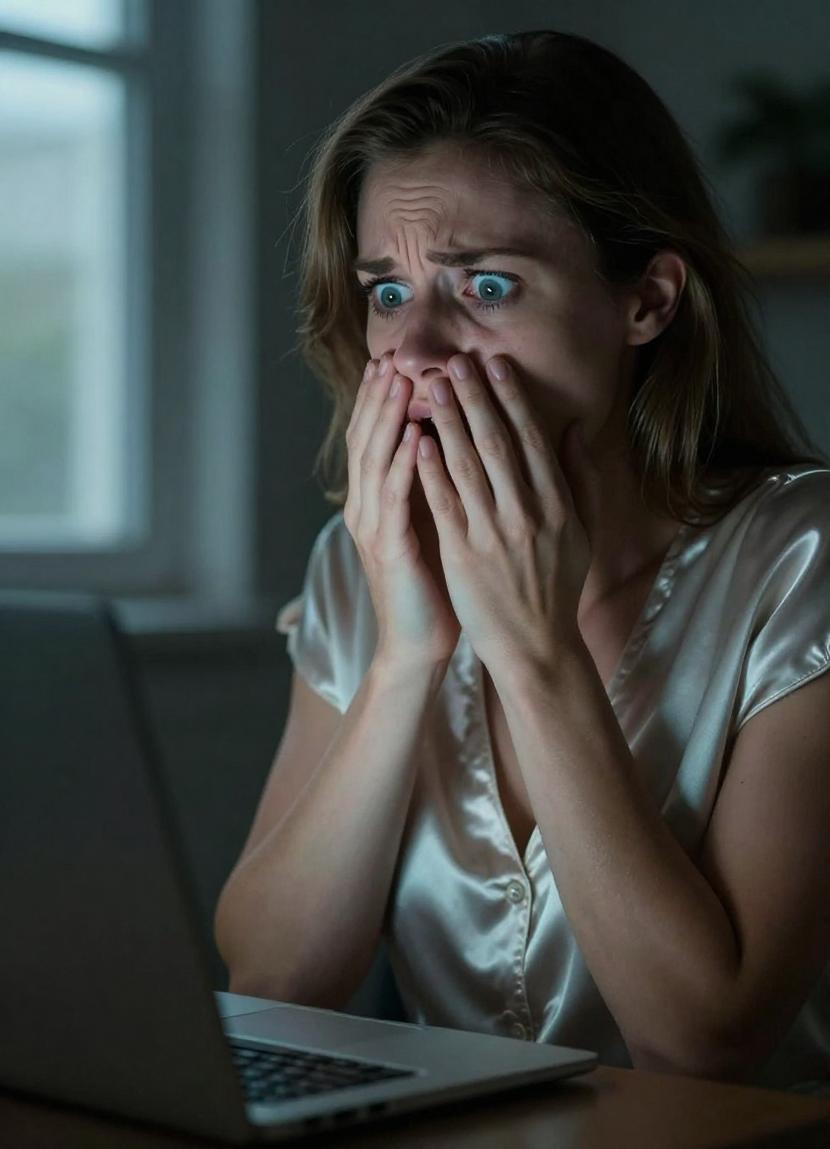
For years, I wrestled with infertility—but not the straightforward kind. Mine was the cruel, haunting type: the “false hope” kind. Three times, I carried life within me, only to watch it slip away each time in the delicate shadows of the second trimester. Each miscarriage wasn’t just a loss but a shattering of dreams, a silent echo of what could have been. My circle of friends and family wrapped me in love and solace, but there was one person—my sister-in-law, Laura—who stood apart in her coldness.
When we lost our first unborn child, a daughter we named Maya, I found a fragile refuge in Laura’s arms. I sobbed into her lap; she caressed my hair with soft murmurs, swearing loyalty and friendship. She promised that when her daughter was born, I’d be the godmother. Clinging to that thread of hope, I started to believe Laura was my ally.
But two weeks later, at her radiant baby shower, Laura unveiled her triumph to the stunned crowd: she had chosen the name Maya for her newborn daughter. The name hit me like a slap; my stomach churned. When I confronted her privately, the mask slipped. “It’s not like you were going to use it,” she sneered, a cruel smirk curling her lips. Her words pierced me. My husband shrugged it off nervously, saying it was coincidence. Men can be so blissfully unaware. On the way home, I poured out my heart again, explaining the calculated cruelty. But he sighed, worn down by his own family’s toxic dynamics, and said, “That’s just Laura being Laura.”
I resolved then that if my daughter’s name lived on somewhere, it would be through me. I threw myself into perfecting my body—Pilates, clean eating—a desperate bid to create a womb worthy of life.
A year and a half later, tragedy struck again. My son, Lucas, passed within me. While standing in HealthMart, a sudden alert on my phone stopped me cold: Laura had posted a photo of her newborn son captioned, “Welcome Lucas! Thanks to my sister-in-law, Isla, for the name inspiration. Her loss, my gain ;)” The cheeky, poisonous emojis that followed filled me with icy dread.
By the time Laura took my third child’s name, Amelia, I was numb. She’d inundate me with nursery photos, mockingly captioned, “Bet you wish this could be for YOUR Amelia.” My husband’s tired defense was the same: “You’re too sensitive.” After four years of torment, stripped of hope, I was broken—but Laura was flourishing, already pregnant with her fourth child, joking openly about which of my baby names she’d claim next. Everyone laughed—everyone but me.
Then something inside me snapped. If Laura wanted another name, I would give her one she’d never forget.
At the next family gathering, I pulled Laura aside, tears fake but eyes steely. I spun a tale of a secret my late mother had left in her diary—a sacred, unheard-of middle name: Lexativa, supposedly meaning ‘sacred child’ in some ancient tongue. I even forged diary pages, curated a Pinterest story, crafted the perfect lie. Laura, eager to grab the legacy, swallowed it whole. She announced on her mommy blog she’d name her daughter Lexativa Rose, honoring our “hidden family history.”
I thought my petty revenge had ended there. But fate had other plans.
Eight months later, to our stunned joy, I was pregnant—deep into the third trimester. We kept it quiet, fearful of another heartbreak. The same week, an invitation arrived for Laura’s Lexativa baby shower. I decided I would face her.
The event was grander than ever, packed with family and Laura’s legion of followers. Midway through her sycophantic speech about the “sacred family name,” I stood, revealing my own news—twenty-nine weeks pregnant, cradling my swelling belly. Silence sucked the air out of the room. Even my mother-in-law’s champagne glass shattered in shock.
The crowd erupted in applause, but Laura’s face drained of color. My husband stood, voice cutting through the tension. “Laura, about ‘Lexativa’ and your research…”
Her bravado faltered. “It means ‘sacred child’ in an ancient…”
He cut in, holding up his phone. “Funny, when I google Lexativa, all that pops up are medical sites about constipation relief.”
The room froze. I took my husband’s hand, proud and hopeful as we left.
But the universe struck me down again. At 4 a.m. that night, sharp, agonizing pain wracked my abdomen. We rushed to the hospital. A third miscarriage—silent, merciless as before. The cruel truth crystallized: one of my prenatal gummies had been swapped with a toxin fatal to the baby. I knew, deep in my bones, it was Laura.
The police were powerless. The vitamins had vanished. My husband, finally shedding his denial, shook as he showed me the empty bottle hidden in our trash, just days after Laura claimed to help set up the nursery.
I documented every detail, uncovering Laura’s accomplice: Elena, her pharmacist best friend at the pharmacy where I picked up my prescriptions. Cornered, Elena trembled and denied, but her guilt was written all over her.
That night, Laura accused me publicly on her blog—calling me delusional, toxic, a liar. Her followers swarmed my social media with vicious attacks.
The next family dinner was at Laura’s house—our mother-in-law begged for peace, pleading not to let a “silly misunderstanding” shatter the family. During dinner, Laura left to feed the baby while her laptop lay open. In a moment I can’t explain, I stepped over, pretending to drink water—and glimpsed her emails: threads on “fertility herbs” and “natural miscarriage remedies.” My hands shook as I snapped photos.
Laura caught me. Her nails dug into my wrist; fury and fear twisted her face. My husband arrived just in time to witness her violence, her mask crumbling. “She’s lost it! She’s trying to frame me!” Laura shrieked to the room. But my husband saw the truth. He took my hand and we left.
The fallout was brutal. Laura’s blog spun tales of victimhood; she filed reports accusing me of instability, threatening our adoption process. The agency froze our application amid a storm of hostile complaints.
Then, Elena’s conscience broke. She confessed to swapping the vitamins under Laura’s blackmail, who threatened to expose a minor work infraction. Worse, Laura had been stealing our mail, including adoption paperwork.
Our final reckoning came at Thanksgiving. Laura, pregnant again, maliciously announced the baby’s name: Margaret—after my dearly departed mother, who had passed just months before.
I stood so fast I knocked my chair over. “You wouldn’t dare,” I whispered, voice trembling with fury.
Chaos exploded as Laura live-streamed the scene for her followers. But the ultimate bombshell came when her own husband found Laura’s secret journal—the damning confession of every cruelty she’d inflicted: delighting in my losses, orchestrating sabotage with Elena, poisoning her mother-in-law’s cat, wrecking others’ lives.
At a tense family meeting, my husband laid out the evidence—the journal, email photos, and even a recorded confession from Laura’s eight-year-old daughter, Maya, who admitted being forced to lie about me. The family sat stunned as Laura’s facade crumbled.
“You barren witch!” she screamed, hurling a vase against the wall. “You’ll never have what I have!”
Her husband and mine restrained her as she shrieked, “I should’ve used something stronger in those vitamins! Made sure you’d never even try again!”
The room fell into an oppressive silence—until Laura’s father-in-law, voice icy, commanded, “Get out of my house.”
Justice came swiftly. Elena confessed fully. Laura’s husband filed for divorce and emergency custody, presenting the journal as evidence. Her carefully curated image collapsed.
The adoption agency apologized and reactivated our application. Three months later, in a sunlit courthouse, my husband and I embraced our newborn twins—Amelia and Lucas—reclaiming the names that were stolen.
Laura was sentenced to fifteen years in a mental health facility. Her children thrived with their father. Then, months later, a call from child services stunned me: Laura had given birth in prison to a baby girl named Isla. They sought a permanent, loving home for her.
Life today is a beautifully chaotic symphony with three children under three: Amelia, Lucas, and sweet Isla Grace. Ours is a family born not from ease, but forged in resilience and love, rising from the ashes of cruelty.
Laura tried to steal everything from me—my babies, my peace, my hope—but in the end, love prevailed.
In that quiet courtroom, clutching my husband’s calloused hand, relief washed over me. Years of pain, deception, and shadows had led to this moment of truth and justice.
The sun set behind me, warm hues painting the sky—contrasting sharply with the dark journey I’d endured. But peace hummed within. We had reclaimed what was ours—not just names, but a future.
The early days post-sentencing were fragile. Healing scars took time. Our once-silent house brimmed with the joyful chaos of tiny giggles, soft footsteps, and whispered prayers. We’d built family—through love, resilience, survival.
When child services called about Laura’s newborn, Isla Grace, I hesitated. The wounds ran deep, yet the innocent child deserved sanctuary. Holding her for the first time, I felt a sacred responsibility.
Days into our life together, I watched Amelia and Lucas, so young yet intuitive, welcome Isla as their sister. Three children bonded by love, names once stolen now symbols of survival and grace.
Though Laura’s shadow lingers, the light of new beginnings shines brighter. The lessons learned—the cruel betrayals, the fierce hope—woven into the fabric of our family.
One day, when they are older, I will tell my children about the woman who tried to take it all, and the strength it took to rise. But more importantly, I’ll share the story of love’s triumph—the family we created through forgiveness, resilience, and hope.
Looking at their peaceful, sleeping faces, I know this truth: love has won. And no one—not even Laura—can ever take that away.