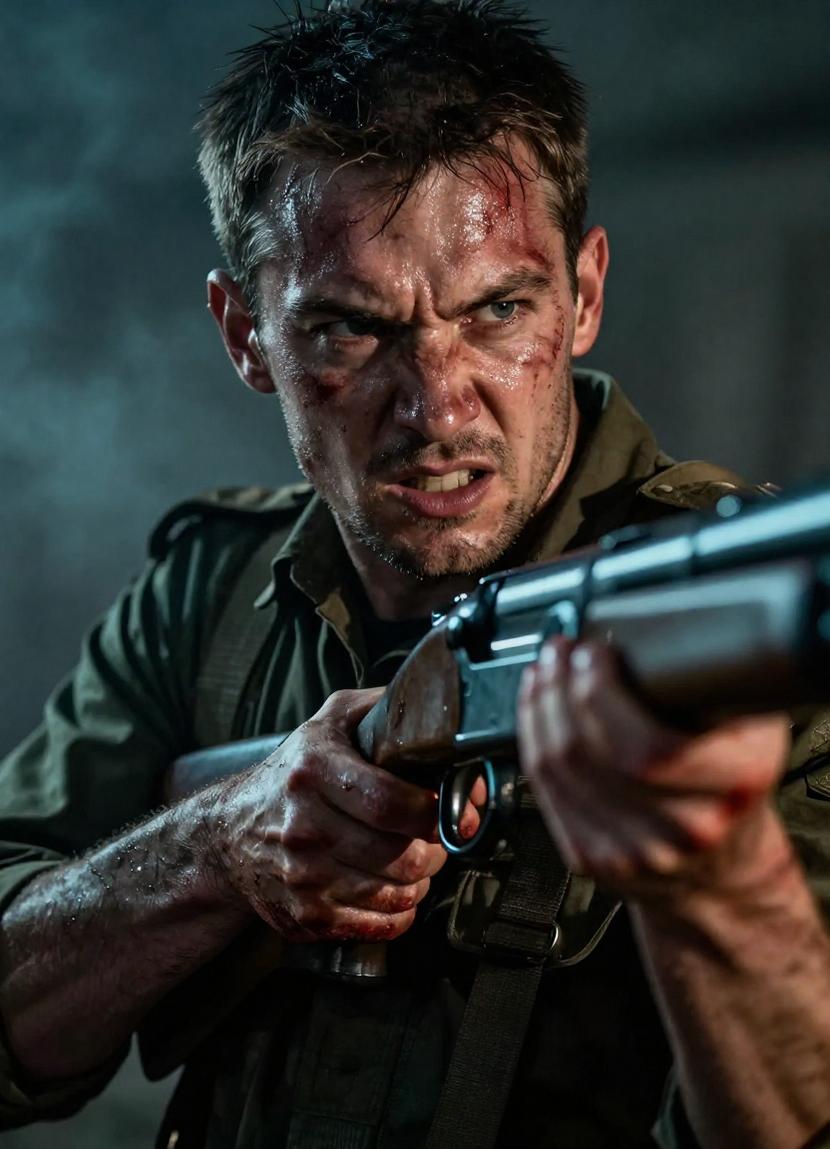
My military career didn’t end with glory or triumph, but with the shattering blast of a mortar shell exploding nearby—a thunderclap that echoed long after the smoke cleared. I was honorably discharged from the Special Forces at Harbor Point Base, the scars on my leg and the relentless ache in my back constant reminders of that fateful service. Coming home to the stillness of a quiet suburb felt like landing on a different planet after years of combat. There, I found Elena again—my high school flame, now a single mother to a radiant, lively three-year-old girl. For a fleeting moment, life seemed to soften; I thought I was finally building something real. But that fragile peace was about to be brutally torn apart by a man from Elena’s past—a ghost no one warned me about.
One night, sleep shredded by instinct, I woke to a sinister noise: steps creeping carefully up the stairs to Elena’s apartment on the second floor. Every fiber of my being screamed threat as I moved silently, heart pounding like a drum. Gripping the shotgun I kept for protection, I stepped into the landing just as the figure reached the top. I leveled the barrel squarely at his chest, and was struck dumb by a terrified scream—my girlfriend’s name.
It wasn’t a stranger breaking in—it was Marco, a junkie from Elena’s past. Years ago, she’d shown him kindness—offered a cheeseburger during one of his darkest comedowns. Now, he was back, ragged and desperate, begging for shelter after being evicted. Elena’s heart, vast and tender, couldn’t say no. She let him crash on her couch—just for a little while, she said.
But Marco was a storm disguised in weakness. The ‘little while’ grew darker fast. He didn’t just take shelter; he took over. Disrespecting Elena, treating her like a servant rather than a savior, he left chaos everywhere: dirty laundry, endless messes, constant demands for meals and money. He drained joy and peace from our lives, sucking the warmth from the home I hoped to share.
The breaking point came over something trivial—a sink full of filthy dishes marinating for days. Approaching my own apartment to escape the chaos, I refused Marco’s bold demand that I wash them. “Get lost,” I snapped, walking down the cold concrete stairwell. Then, the door behind me burst open. Marco charged like a wild animal, shoving me with brutal force.
I tumbled helplessly down the stairs, the harsh sting of concrete biting into my back, my head cracking against the unforgiving floor. Before I could breathe, he was on me, fists raining down. Pain flared hot in my body, but my training ignited a frozen fury. Gritting my teeth, I reversed our positions and unleashed a relentless storm of my own, every strike cold and calculated. I didn’t care if it ended with someone broken; I wasn’t going down without a fight.
Elena’s frantic screams tore through the chaos, pulling me back. “Get off him!” she shouted, and the obedience drilled into me over years surfaced. I backed away, panting, as Marco gasped his false story—”He attacked me! He threw me down the stairs! All because I asked for the PS3 I lent him back!”
For a chilling moment, I feared her believing Marco’s poison. But thankfully, she knew me better than that. Surveillance footage from a neighbor’s camera caught every brutal second, exposing Marco’s lies. Even so, the damage was done. Tension hung thick in the air the next morning as I drove Elena to work and her daughter to daycare. At Harbor Point Base, my commander saw my bloodied knuckles and cold pack. He urged me to call the police and press charges.
I refused. Risking Elena’s fragile love felt worse than the beating. My commander warned me my loyalty was misplaced and warned me it would hurt me in the end. He was right.
Marco issued an ultimatum: me or him. If I stayed, he’d walk away—and leave Elena and her daughter without the only consistent male presence they’d known. Elena, torn between her daughter’s fragile world and my battered heart, chose to sever us. I was the one pushed away.
The sting of that breakup was deeper than any wound I’d ever endured—a gut-wrenching goodbye not just to Elena, but to a little girl I had quietly started to see as my own. I retreated to the hollow silence of my apartment, clutching a small box of their forgotten clothes and toys, waiting for a moment to return them.
But Marco was far from finished. He wanted to shatter what remained. Months later, I woke to the horror of my car stripped—wheels stolen, windows shattered, crude insults scrawled across the doors. Repairs drained $2,500 from my pocket, and the police report yielded no answers. The masked vandals remained spectral ghosts.
Two weeks on, the terror escalated. The acrid scent of gasoline smothered the dawn as a Molotov cocktail exploded against my front door. My apartment’s sprinklers were the only reason I wasn’t trapped in a deadly blaze. Police paid this attack more attention, but the masked figure on camera remained anonymous.
The harassment ceased briefly after Elena reached out, horrified by the fire. She vowed to confront Marco, and for a time, peace returned. But once police investigated Marco at his job at Gremlin Garage, he was fired—his anger turning volcanic.
One evening, returning from the gym and grocery store, I trudged toward my apartment, groceries in hand. Four men—hooded, masked, gloved—charged down from the floor above like predators. My door was ajar; despite my scramble to shut it, they forced their way inside.
Seconds stretched into a nightmare etched in cold precision. In a closet near the door, I kept a loaded Sig P226. I grabbed it with desperate resolve, stepping back. The first attacker lunged again—my finger found the trigger.
There was no hesitation. No mercy. Each shot found flesh and bone: body, body, head. Three men fell lifeless. The fourth, Marco, stumbled toward escape but was struck by three rounds—one grazing, one to the buttock, and one shattering his spine. Paralyzed from the waist down, he survived, but barely.
The hospital stay led straight to prison—charged with the deaths of his accomplices during felony, conspiracy, assault, and battery. The man who tore my life apart would never breathe free air again.
I wish I could say Elena and I reunited, that love triumphed, that we forged a family. But within a day of the shooting, her trembling, fearful voice shattered that hope. She called me a monster—accused me of orchestrating the attack, of being driven by rage. The months of vandalism, arson, and threats—ignored. She cut me out of her life, blocked all contact, vanished with her daughter.
Eight years later, the ghosts still haunt me. Combat taught me to face enemies abroad; this violence hit home and twisted my soul. PTSD gripped me; for a year I couldn’t bear the sight of guns without panic. The Navy’s support line was a lifeline.
I’ve since retired, founding a thriving cybersecurity firm. My partner of three years brings love and healing; we dream of children. Life has found its rhythm.
Recently, a Google alert I set years ago pinged—Marco’s obituary. A fellow inmate, fed up with his ceaseless trash talk, used the man’s own wheelchair to end his days. The obituary painted him as a ‘bright and lovable lad’ undone by hardship. Oddly, it added that he is survived by a daughter none of us knew. She’s better off never knowing the real Marco.
The wound Elena left behind still aches; I left my shattered refuge and moved to a different apartment, where silence roars. Time passed, and one day, Elena called, tentative and regretful. We met at Brew Haven. She apologized, but words couldn’t mend the ruins.
Weeks later, I learned the final truth: Elena had been manipulated, pushed by Marco’s lies to sever us, desperate to shield her daughter from losing another male figure. But Marco was no brother—he was a malignant parasite, exploiting her kindness until all was drained.
The worst was that Marco wasn’t even hers anymore. His “brotherly” bond was an act, a trap to keep her tied. His interest moved elsewhere.
Walking away was the hardest choice, but the right one. I could never find peace in a shadow he cast.
I didn’t need to be anyone’s hero or perfect partner. True strength was in letting go—knowing when to rebuild and rise alone.
Slowly, I rebuilt my life. The scars remain, but they fade with time.
In the end, the greatest victory wasn’t fighting for them—it was surviving without them, finding freedom and peace in my own story.