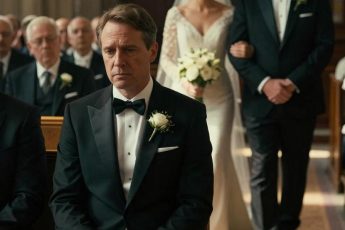
The thick air of the auditorium was saturated with the sharp scent of starched uniforms and the brittle shine of polished leather. General Herrera’s voice thundered from the podium, each word sharpening the weight that pressed down on me. Hundreds of eyes bore into my back, but none stung deeper than those of Edwin and Clara sitting in the front row. Their faces, only moments before glowing with parental pride for Alejandro, had drained to a pale, frightened white – like they were staring at a ghost. Not just any ghost, but the phantom of a betrayal they had painstakingly built and nurtured for nearly a decade.
I am Marcus, 34 years old. For eight relentless years, at family dinners and in hushed neighborhood whispers, my name has been twisted into a tale of cowardice – accused of deserting the United States Navy. Edwin, a former lieutenant whose own military career had stalled short of the glory he craved, turned my supposed desertion into his favorite bitter fable. “Marcus couldn’t last three months in basic training,” he’d declare with theatrical disappointment, pouring whiskey for his friends. “Thank God we have Alejandro. That boy has grit.” Clara would silently nod, her face a painful mask of shame, as though my very existence were a stain on the family’s honor.
But the truth was a secret too tightly locked behind sworn oaths and layers of military confidentiality to ever be shared. Eight years ago, I wasn’t a deserter—I was a recruit, handpicked for an ultra-classified special operations unit whose very existence was erased from public records. While my family imagined me stuck in a dead-end job at some small security outfit in the capital, I was commanding clandestine missions across fifteen countries. I witnessed humanity’s darkest and brightest moments, climbing ranks until I achieved the title of Colonel—silent, unseen, unacknowledged by those I called family.
Every holiday, every birthday, was a relentless exercise in swallowing bitterness. I showed up in plain clothes as an invisible specter in their celebrations, enduring their thinly veiled barbs. “At least you did find something you can handle,” Edwin would sneer, his hand landing heavy on my shoulder, the pity like a slap. Then his voice would swell with pride extolling Alejandro’s most rudimentary training milestones. “Your brother’s on track to be a Special Forces Marine. Do you know what that means?” Of course I knew—I had trained men like him. Yet I remained silent, shackled by duty.
When Alejandro invited me to his graduation and decoration ceremony, I said yes. My brother was innocent in the web of lies spun about me; he genuinely believed the fabricated story. “I know this might be hard,” Alejandro wrote, “but it would mean the world if you came.”
So, I came. I sank into the farthest back row, an unassuming shadow amid proud families, dressed not in the uniform that was rightfully mine, but in civilian clothes. What no one in my family fathomed was that General Herrera—presiding over this ceremony—had been my direct superior for three grueling years, commanding operations that would vanish into the shadows of classified history.
I watched him command the stage like a titan, his demeanor as austere and fearless as the dust-choked mission briefings we endured together. He spoke of honor, loyalty, and sacrifice—virtues that had been both my armor and my prison during these years facing family scorn. Alejandro accepted his insignia, his face a radiant beacon of unguarded pride. Edwin and Clara waved, tears streaming with genuine joy. I clapped quietly, joy for my brother tangled with the bitter irony of my own erased existence.
Then came the moment that shattered the silence.
After the last graduate was honored, General Herrera paused. The murmur of applause ebbed. He scanned the room, eyes sharp and searching, until they locked onto me. Recognition flared in his gaze, edged with a fierce fire of justice.
“Before closing,” he announced, voice echoing like a cannon blast in the hush, “there is someone here whose presence is as unexpected as it is honorable.”
Confused whispers rippled through the crowd.
“Colonel Marcus,” he called, his voice ringing out with undeniable authority. “Please stand.”
The room froze. Time stretched and warped. Hearts pounded in the silence as I met Herrera’s unflinching stare. The same man who’d sent me into blistering deserts and deadly jungles now summoned me to the spotlight of truth. I swallowed the lump rising in my throat and stood. The scrape of my chair against the polished floor tore through the silence like thunder.
Every head turned. Alejandro’s eyes widened, mouth agape, struck dumb by the revelation. Edwin’s face flushed deep crimson—shock, fury, and the dawning shame warring across his features. Clara’s lip trembled as she raised a shaking hand to stifle a gasp.
I strode down the aisle, a man stripped bare before a family that had long condemned him. With every step, years of silence, of being branded a failure and coward, clung to me like chains. Yet as I walked, those chains fell away. I was no traitor. I was Colonel Marcus, an officer of the Advanced Intelligence Special Operations Forces, a ghost soldier whose valor had been hidden in shadow.
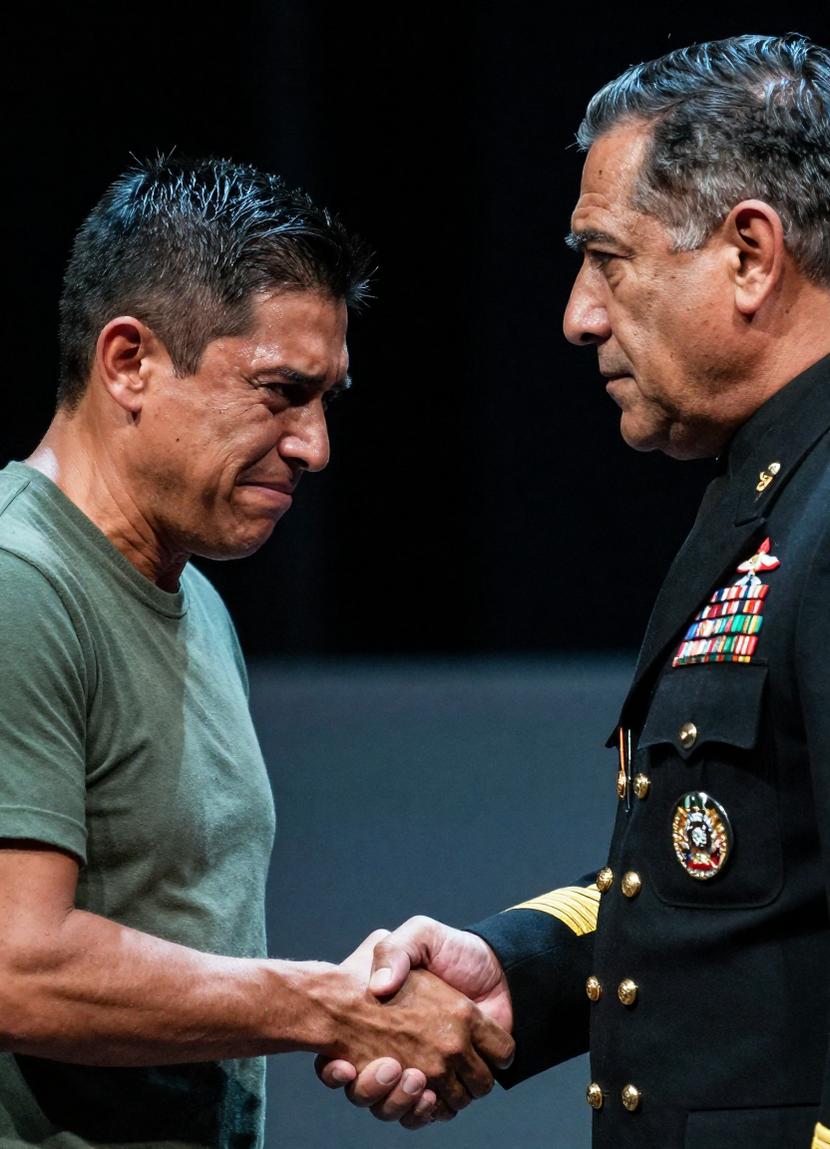
General Herrera waited on stage, his iron grip firm as he shook my hand. “This man saved lives in more than fifteen countries,” he proclaimed, voice thick with rare emotion. “He led missions that altered the fate of conflicts. And through it all, he endured the shame born of lies. Today, as a general and as a man, I break protocol to honor the truth.”
He embraced me—raw, sincere—a brother’s bond, not a mere ceremony. The crowd erupted, initial ripples of applause swelling into a seismic standing ovation. The entire auditorium rose—except Edwin and Clara.
Alejandro was the first in my family to stand. He rushed toward me, his new insignia gleaming, and clutched me in a hug overflowing with disbelief and fragile hope. “Why?” he breathed, voice choked with turmoil. “Why didn’t you ever tell us?”
“Because I couldn’t,” I whispered back, the old brotherly hand resting on his neck. “Because no one believed me when it mattered most.”
Outside, my phone vibrated. A message from Isadora, watching through a private military feed: “Now they know. Come home when you’re ready. I’m waiting.” The hardest battle was only just beginning.
That night, Alejandro invited me to dinner. “They want to talk,” he said with hopeful innocence. At Laurel Bistro, tucked into a shadowed corner, silence spread like a venom. Edwin sat rigid, arms crossed, thunder darkening his gaze. Clara avoided my eyes, seeking refuge in her menu. Aunt Rosa, family’s voice of reason, offered a fragile buffer.
The quiet cracked. “Eight years, Marcus,” Clara’s voice trembled, brittle with pain. “You left without a word, and now you appear before us as a colonel?”
“I never left you,” I said with calm resolve. “But my mission demanded silence.”
Edwin laughed bitterly, derision dripping. “Duty? Leaving your family is duty now?”
“No, Edwin,” I snapped, my voice a rising tide of years’ worth of bottled fury. “Fulfilling an oath is. I swore confidentiality legally and morally. My life, and my men’s, depended on silence. When I vanished, you didn’t seek truth. You spun convenient lies to protect your pride.”
His fist slammed the table. “And what did you want me to say? That my son disappeared — and I didn’t know if he was alive? I am a former lieutenant! I have a reputation!”
“You had pride,” I fired back. “But you lacked courage to defend your own son. It was easier to call me a coward than admit ignorance. You cared more about your friends at the VFW than the truth.”
Isadora arrived then, her presence commanding like a calm storm. She kissed my cheek and took a seat, voice slicing through the tension. “Good evening. I’m Isadora Marcus—Senior Analyst, Strategic Intelligence Division, and witness to everything Marcus has borne.” She presented her wedding ring subtly, widening Clara’s eyes. “Marcus served on operations you’ll never know about. He endured conditions unimaginable. He was never weak. He was strong enough to endure your scorn quietly.”
Silence swallowed the table.
Edwin’s voice was a broken whisper. “And now, you expect us to just believe?”
“I’m not asking for belief,” I said, meeting him eye to eye. “I’m telling the truth. If you want me to apologize for not being the son you wanted—the son who followed in your footsteps but never surpassed—you will be disappointed again.”
A year has since passed. Truth doesn’t heal instantly. It rebuilds, painfully, amid rubble. Weeks after that night, Clara confided tearfully, revealing a hidden album—photos Isadora sent secretly: me at distant ceremonies, with my unit. “I pretended not to know where you were,” she whispered, fingers trembling tracing my image. “But holding onto these kept hope alive.”
Alejandro and I forged a new bond. One evening, on my porch, he confessed, “I joined the Navy because of you, not for Dad. Part of me always sensed their story was false. I wanted to understand you.”
The biggest transformation was Edwin. Months later, he came to the Veterans Aid Center I founded. Smaller, older, he hesitated. “I wrote and erased this message twenty times,” his voice cracked. “Marcus, I’m proud of you—more than words can say. I wanted you to be like me, but you’ve soared beyond my dreams. I’m not asking for forgiveness, but I want to earn it every day.”
I embraced him then, a man’s hug heavy with years of silence now finally spoken.
Today, I stood on a stage, accepted my own official decoration. My family was there—Edwin, proudly dusted in his old uniform, looking up to me; Clara with tears of pure, uncomplicated pride; Alejandro saluting me with a wide smile; and Isadora, my anchor, my home. After the ceremony, Edwin’s embrace was strong, silent—the weight of all we never said finally carried between us.
Some men win wars. Others conquer silence. On that day, I won both.