I never expected to lay bare this chapter of my life, but the weight of silence has grown unbearably heavy. I’m a 28-year-old man, shaped by hardship and the scars left by a father whose heart seemed forever locked away. My mother died giving birth to me—a tragedy that cast a long, cold shadow over my childhood and painted my father’s love with guilt and distance. To him, I was a painful reminder of a loss he never overcame.
I don’t have a single memory of my mother, but living in a house preserved as her memorial was like residing with a ghost. Her clothes hung untouched in the closet, their faded scent lingering like a fragile whisper from the past. Her favorite books stood rigidly on the shelves, undisturbed, their spines cracked by no hand but mine, longing for connection. As a boy, I’d steal into the room she once occupied—the air heavy with the faint trace of her perfume—and touch her silk scarves, trace my fingers over the jewelry box on her dresser, craving a bond I never got to have.
But my relationship with my father was marked by a starkly different loneliness. Physically present but emotionally absent, he was a ghost in his own right. He performed the basic roles of a parent—making sure I wasn’t starving or freezing, getting me to school—but warmth, encouragement, or affection never crossed his lips. Hugs and proud praises were alien to our home. Most days, he ignored me completely; when he spoke, it was to criticize or, painfully, to compare me unfavorably to my cousin, Ethan.
Ethan’s father, my uncle, died suddenly in a car accident when Ethan was just seven. I’ll never forget that stormy Tuesday afternoon—the rain hammering the windows as his dad’s voice crackled through the telephone. My father’s face crumpled in a way I never expected to see; it was the only time I ever saw his tears. After that day, my father shifted all his attention to Ethan. At first, I thought having another kid around might brighten our silent house, maybe even thaw my dad’s frozen heart. I was wrong. Ethan’s arrival only deepened the crack between us.
He became the standard that made me feel invisible. ‘Why can’t you be more like Ethan?’ my dad would sneer after I stumbled over a school presentation, my nerves clashing with Ethan’s ease and charm. ‘Ethan would never do that,’ he’d say if I dropped a dish in the kitchen. Ethan was the son he’d always dreamed of—athletic, outgoing, effortlessly winning hearts. I was the quiet bookworm—the disappointment.
I bent over backward trying to earn his approval, but it was a lost cause. I remember with aching clarity the science fair when I was twelve. I had crafted a detailed, motorized model of the solar system, gears clicking perfectly and planets hand-painted with care. Winning first place felt like a triumph—and a chance for my father to see me. Heart pounding, I burst into the house holding my prize.
“Dad! I won first place!” I shouted, barely containing my excitement.
He barely glanced at me, his eyes drifting back to the football game on the television where Ethan sat, laughing.
“That’s… nice, son,” he muttered dismissively before turning back to Ethan. “So, like I was saying about that final play…”
I felt like I’d been knocked down by a hail of invisible blows. Ignored was too kind a word—I was erased.
The years only deepened the divide. In high school, while I burned the midnight oil to excel academically, Ethan starred on the football field. My father downplayed my successes with cutting remarks. At a parent-teacher meeting, my English teacher praised an essay I had poured my soul into, calling it exceptional and full of promise. My dad’s only response: “How’s that going to get him a sports scholarship?” The teacher’s shocked silence and my burning humiliation haunted me long after.
Still, I clung to hope, thinking college would be the key to unlocking my father’s pride. I poured my heart into applications and acceptance letters, ready to start fresh. But the reality was cruel. Passing his home office one afternoon, I overheard a phone call—my father’s warm, boastful voice assuring Ethan, “Don’t worry, kid. Tuition’s covered all four years. Just focus on football and classes.”
My chest caved in.
When I finally summoned the courage to ask for help, my voice barely steady, his answer was cold and final. “Ethan needs it more,” he said, dismissing me as though I’d asked to breathe air.
Determined, I took a grueling job at the Sunny Side Diner, working late shifts after classes, juggling scholarships and part-time work. But the pressure was relentless. By the end of my first semester, exhausted and defeated, I was forced to drop out.
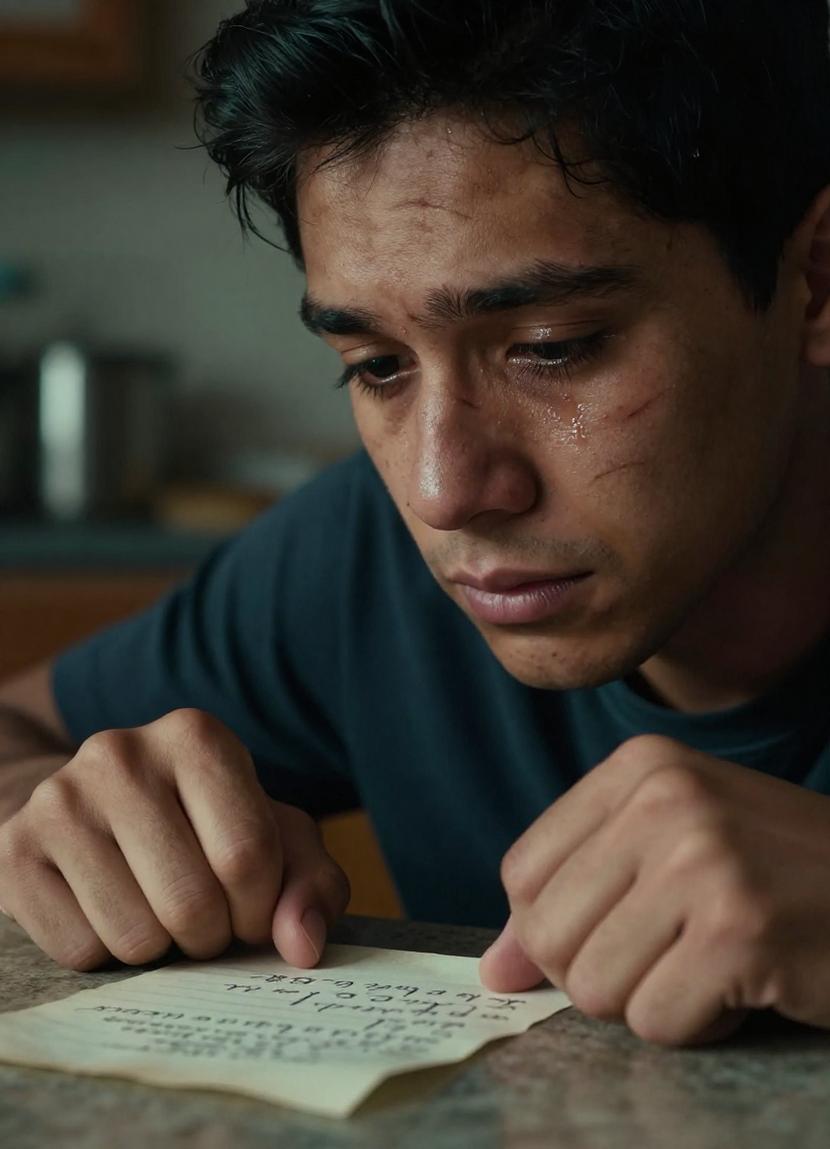
Meanwhile, Ethan thrived at a prestigious university, funded entirely by my father. His social media was a quantum of all my stolen dreams—pictures of his sleek dorm, beach vacations, and brand-new gadgets paid for by my dad’s money. Each post was a dagger twisting deeper. I hit my breaking point. Packing my few belongings, I left a terse note on the kitchen table and vanished—cutting all ties with the toxic shadow of my childhood.
The following years were grueling. I took any job I could find—waiting tables, construction, night shifts at gas stations. I wondered bitterly about Ethan’s triumphs: the college parties, the career launch. Yet, painstakingly, I was weaving a life of my own.
Now, I manage Bright Pages Bookshop. Surrounded by stories, I find a kind of peace. Night classes at the community college fill my evenings as I chase the degree I deferred. More importantly, I’ve built a chosen family of friends who love and accept me, sharing game nights and camping trips—real connections, imperfect yet mine.
I thought I had buried the past—until a phone call shattered the quiet. It was my father, voice cracked with desperation and age after three years of silence, asking for money.
I listened, stunned. The man who had forsaken me for Ethan now pleaded for help. I asked bluntly, “What about Ethan? Your golden boy?”
He hesitated, then claimed Ethan was too busy to assist. Bitter laughter escaped me. After years of being haunted by comparisons to Ethan, now I was supposed to rescue my father. I told him to go ask Ethan.
Silence hung between us before my father confessed regrets and spoke of how grief had blinded him. But I cut him off: ‘It’s too late for that. I needed you as a son, not when you need me as a banker.’
I hung up, feeling an unexpected relief. I had finally stood my ground. Yet curiosity gnawed at me—what had landed my father in such desperate straits that Ethan, the favored son, was nowhere to be found?
Digging quietly, I called Mrs. Ramirez, my mother’s closest friend. She was startled to hear from me but spoke openly. My dad had sunk every spare dollar into Ethan—down payments on a home, a flashy car, even funding the tech startup Ethan had launched with college friends. To do this, he’d mortgaged our childhood home and drained his credit cards. But Ethan’s startup crashed spectacularly.
Mr. Martinez, my old neighbor, had overheard a fierce argument just weeks ago—Ethan returned in a flashy sports car; my father confronted him about money. Ethan shouted about market shifts and refused to help, then sped away, leaving my father broken and defeated on the driveway.
A grim satisfaction flickered inside me. The golden son was tarnished, the perfect investing didn’t pay off. Yet, mostly, I felt exhaustion—exhausted by the endless storm.
I messaged my father, telling him I knew of the collapse, the mounting debt, and the betrayal. I offered no help, no gloating—just a clear reminder that choices carried consequences for both of us.
He replied with a long, rambling apology, confessing his faults and grief. He said my mother would have been proud, and asked to meet.
For days, I wrestled with the boy inside me longing for his love and the man I’d forged through hardship. I remembered missed milestones—graduations, my first heartbreak—moments he’d never shared.
Finally, I replied, thanking him for his words but saying I wasn’t ready to meet, and making it clear: I would not rescue him financially. His path was his alone, as mine had been.
Now, as I write these words, I feel a newfound peace. Years of longing for love were never about me but about my father’s unresolved pain. The future of us remains uncertain, but my focus is clear: building my life, continuing my classes, nurturing my chosen family, and walking my own path. For the first time, I belong to myself.