Laura and I had always managed a relationship that could best be described as indifferent. We never swapped clothes, never confided in each other about the boys we liked, and when it was just the two of us, an awkward silence filled the room—one neither of us seemed eager to break. But everything shifted coldly the day she turned 21. The moment she tasted alcohol, everything spiraled. What had been occasional drinking grew into a relentless habit: monthly became weekly, then daily. The worst part? Laura constantly tried to drag me into her downward spiral.
On her 22nd birthday, she handed me a bottle of water which was actually vodka. As I choked and spat it out, coughing, I looked up to catch her filming my reaction, her laughter ringing like a cruel echo. That was my breaking point—I gave her a final ultimatum: if she ever tried to pull me into drinking again, I was done. A month later, at her anniversary dinner with Adam, she slipped me diluted drinks laced with alcohol. The world tilted beneath me, and when I confronted her, she laughed it off. I didn’t hesitate—I flagged a cab and told her that was the last time she’d see me.
Life moved on without her. I met Ethan, the love of my life. We got engaged, married, and began our family—without an invitation extended to Laura. Then, during my pregnancy, out of nowhere, a message from her arrived. She saw my baby announcement on Facebook and had an epiphany: “nothing is more important than family.” She apologized, begged for a second chance. Reluctantly, I agreed.
We met for coffee; she was contrite, but her wine glass kept coming—three in total—revealing she was still deep in her drinking. She promised she’d respect my boundaries.
For a year, things seemed okay. But last week, Laura crossed the line in the most terrifying way. It was the first time since Liam’s birth that I’d allowed her into our home. I told her explicitly: no alcohol near the baby. She assured me it wouldn’t be a problem. I hesitated, a bad feeling gnawing at me, but I forced my doubts aside.
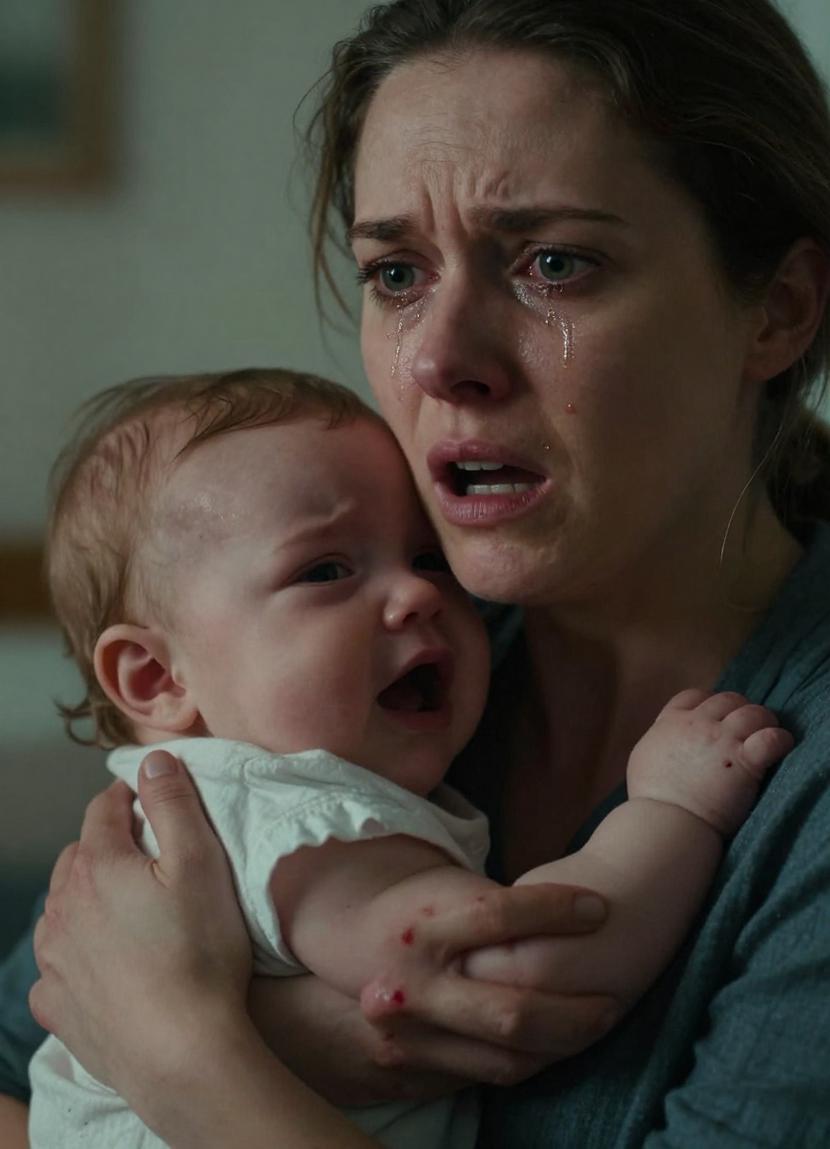
She arrived with two bottles of wine. The evening started pleasantly; even Ethan had a glass. Laura drained almost both bottles, visibly drunk. I thought the worst was behind us—until she excused herself to the bathroom. Minutes later, I found her not there but in our bedroom, holding Liam. When she saw me, panic spread instantly across her face as she tried handing him over. But her intoxication betrayed her—she stumbled, dropped my son onto the floor. My scream shattered the quiet. Liam cried out but thankfully wasn’t badly hurt.
My heart plummeted. I called Ethan to take Liam and dragged Laura down with me. I laid it out: one rule, one boundary—and she shattered it. I called her a cab, swearing I never wanted to see her again.
But the horror wasn’t over. Later, I learned she had fed Liam the remaining wine. Upstairs, he was sick, vomiting, while Ethan wept, dialing the hospital.
The ambulance arrived like a nightmare come to life. At the ER, doctors confirmed infant alcohol poisoning. As tests ran, Ethan and I paced the sterile waiting room, terror clawing at our chests. When the social worker started a child welfare investigation, we felt like suspects in a nightmare. I tried calling Laura—no answer. She had disappeared.
Hours later, relief flooded us when the doctors assured Liam’s survival but warned of close monitoring. We took him home, our relief mingled with rage.
I confronted Adam at her apartment. He answered, hungover and pale, admitting Laura’s drinking was out of control. I made it clear: if either of them approached my family again, the police would be involved.
Ethan and I agreed—Laura was out of our lives. We blocked all contact, installed a security camera on our front door.
But within a week, Laura posted a tearful, drunken video online, painting herself as the victim, claiming I was cruelly withholding her nephew over a “tiny mistake.” Family members flooded me with calls, accusing me of being too harsh, some believing her without hearing my side.
Then came a letter from Laura, claiming she was in rehab and seeking family healing. Ethan urged verification—I called the named facility. It didn’t exist.
I sat watching my sleeping boy, stunned by my sister’s betrayal and lies. Ethan suggested a restraining order, but Marcus, a detective friend, warned me judges needed a pattern of behavior. We documented everything.
That night, the doorbell sounded sharply. I checked the camera—Laura, stumbling on the porch, intoxicated, clutching flowers and a teddy bear. She rang insistently, then left the gifts and a note: “I’m so sorry for the misunderstanding. Please let me see my nephew. He needs his auntie. Love, Laura.” The violation felt raw.
The very next day, our pediatrician’s office called: someone claiming to be Laura had asked for Liam’s medical records, attempting to forge authorization.
Days later, Nina, the daycare manager, confided a woman matching Laura’s description had inquired about Liam’s enrollment. The creeping dread was suffocating.
Our parents invited us to Sunday dinner, assuring Laura wouldn’t be there. But the moment I heard Laura’s unmistakable laugh from the kitchen, I grabbed Liam, packed the diaper bag, and left. Ethan came behind me, grim and betrayed. Our parents admitted they had harbored Laura after Adam kicked her out.
The fracture was deep. I texted our parents: “We need space. Please respect that.” Then blocked them.
At the grocery store, I felt eyes on me. Laura was lurking in the produce aisle, feigning interest in oranges. Panic overwhelmed me—I fled.
We sought legal aid. Marcus agreed: time to pursue the restraining order aggressively.
Laura escalated—new emails, desperate voicemails, stalking.
Our nanny Sophie reported a car circling the block during her walks with Liam. Then Riley, a mutual friend, revealed Laura had been asking about our routines and spare keys. We called a locksmith immediately.
One eerie night, Ethan woke me—an unfamiliar car idled across the street for hours. Laura fled when confronted by Ethan and police.
With mounting evidence, Marcus secured a temporary restraining order. For a moment, peace settled.
But then I stumbled upon a chilling Instagram “mommy blog” called “Auntie Laura’s Adventures” using our private photos, fabricating stories.
Our therapist, Dr. Andrew, tried to help. In our first session, a neighbor’s call shattered calm—our home had been broken into.
The police found nothing stolen but discovered a basket in Liam’s nursery—clothes soaked in red wine, a card reading: “Since you won’t let me see him, I’m sending something to remember me. Blood is thicker than water, but wine leaves a stronger stain.”
Fear forced us to flee to Ethan’s parents in Riverbend, a gated sanctuary. But safety was fleeting; a text arrived from an unknown number: “Nice place. The garden looks peaceful.” Laura had tracked us again.
Stephen, Ethan’s father, fortified our security. The court date loomed. Laura’s lawyer painted her as a struggling addict punished unfairly and claimed she was in rehab.
In court, the judge took time to review. Outside, my mother begged for forgiveness, but I couldn’t unsee the danger Laura had caused.
“Mom, she fed my baby alcohol, stalks us, broke into our home. We’re done.”
The night before the rescheduled hearing, security cameras caught Laura trying to scale our backyard fence.
The judge granted a three-year permanent restraining order. Hours later, Laura violated it by emailing threats: “No piece of paper will keep me from what’s mine.”
Police found her empty apartment littered with liquor bottles and photos of Liam—some taken from afar—and maps of our routines.
Three days later, Sophie called, voice trembling: she spotted Laura at the park. Ethan intercepted Laura as she tried to flee; police took her into custody.
Relief crashed over me like a wave. Laura was out on bail, tethered by an ankle monitor and tests. A full psychological evaluation revealed not just alcoholism, but deep personality disturbances. Court-ordered treatment followed.
A letter later arrived from Laura’s therapist requesting supervised family sessions. We declined.
Months passed, and our parents admitted they had enabled Laura’s behavior for years. Slowly, a tenuous understanding emerged.
Six months of calm led to Laura’s letter of sincere but cautious remorse. She didn’t seek forgiveness but acknowledged the wounds she’d caused.
By Laura’s two-year sobriety mark, we established a fragile but peaceful distance. She attended family events with Liam under strict sobriety and supervision.
Meanwhile, I continued therapy with Dr. Andrew, wrestling with anxiety but moving forward.
On Liam’s fourth birthday, Laura was there, modestly gifting a dinosaur book after clearing it with me. She sat alone, breaking the silence: “Today marks three years sober. Thank you.”
“Thank me for what?”
“For sticking to your boundaries. If you hadn’t, I might never have faced my demons. Your refusal saved both of us.”
As I walked back to the party, I felt a fragile hope. Not the sisterhood of dreams, but a relationship rebuilt on respect, boundaries, and healing.
Last week, Laura celebrated four years sober and moved to a nearby town to work in addiction counseling. Every gift is pre-approved, every visit measured. Watching her with Liam, I carry a mix of weariness, sorrow, and cautious gratitude.
Some wounds never heal fully. I doubt I’ll ever be completely at ease when Laura is near Liam. But the acute terror faded, replaced by vigilance that feels manageable. The hardest battles shape us. The best revenge against trauma is reclaiming our lives.
We move forward—cautiously, deliberately, and hopeful.