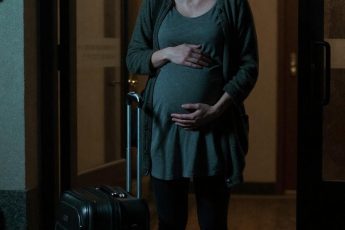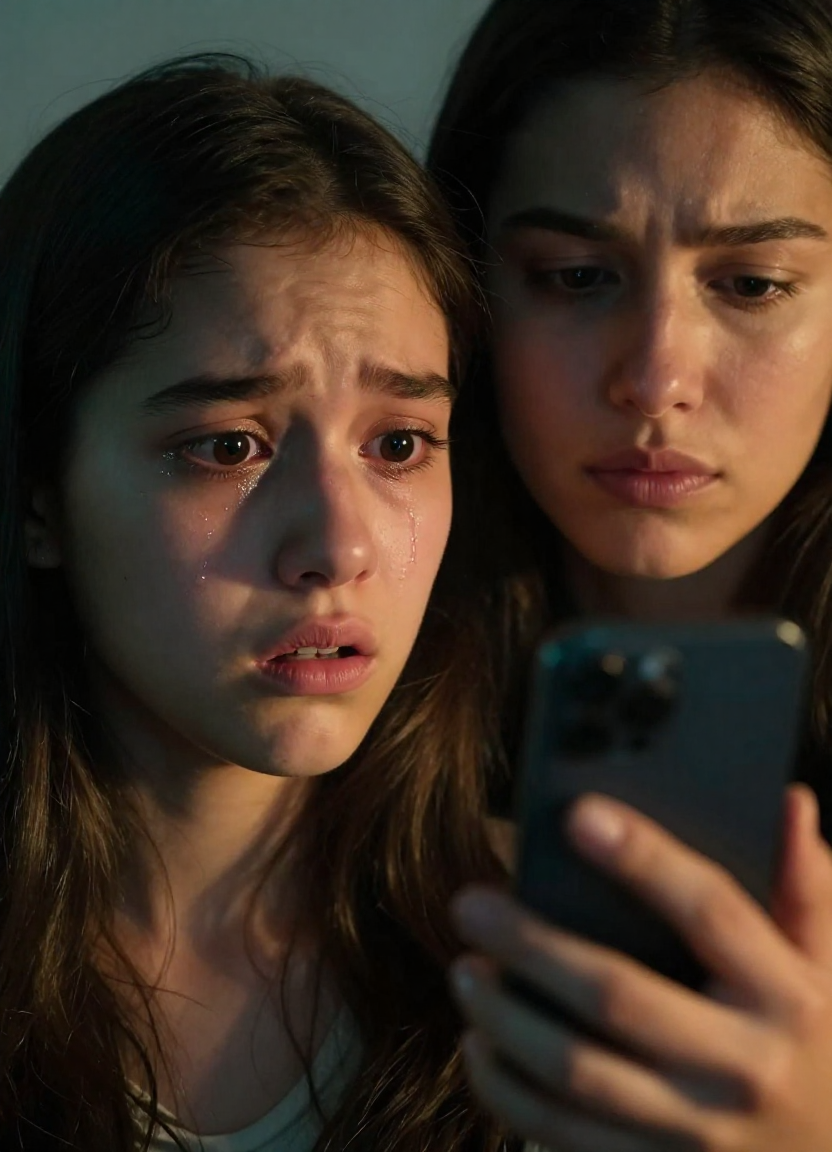
My younger sister, Isabel, came into this world two months early, her tiny body tinged an eerie shade of blue—like a lost Smurf—and she spent her first three fragile years clinging to life, hooked up to a web of tubes and machines. Naturally, Mama and Papa wrapped her in a cocoon of protectiveness, hovering perpetually by her side. They showered her with every toy her heart desired and expected me, Laura, their eldest, to abandon my friends at a moment’s notice to babysit her.
At first, I embraced this role, thinking it only right for my chronically ill little sister. But as Isabel grew, her health improved remarkably. The tubes vanished, the machines went silent, and she began to live an ordinary life. Yet, by then, Isabel seemed to have mastered illness as her currency—winning sympathy, attention, and gifts with every whispered complaint.
Her headaches reappeared with uncanny timing—always when homework beckoned. Mama or Papa would confiscate her books, replacing them with ice cream as consolation. By the time Isabel hit eleven and I was sixteen, she had become a virtuoso of feigned suffering. It gnawed at me, especially because her pain never happened except during my moments.
When I made varsity soccer, mysterious stomachaches sidelined her, forcing our parents to leave my debut match early. The night I got into college, she collapsed during my celebration dinner. We spent hours in the emergency room, but the doctors found nothing amiss.
Even worse was the smirk she threw my way when she thought no one noticed—the subtle triumph in her eyes. She practiced her pained expressions in mirrors like a seasoned actress. I tried warning Mama and Papa, but Isabel had already spun tales about my jealousy over her “needed” attention.
My boyfriend Ethan only lasted eight months. Isabel sabotaged him mercilessly, fabricating screenshots where I supposedly mocked her sickness and wished her dead. The breakup happened in a bustling coffee shop, Ethan sliding his phone across the table, showing me the “proof.” Unable to face me any longer, he walked away, and then Isabel sent me a smug selfie—wearing the hoodie Ethan had given me.
That broke something inside me. Years of helplessly watching her steal every precious thread of my life had reached a boiling point. So I began watching her—really watching her—closely, with the sharp eye no one else ever bothered to use.
A pattern emerged: every time Isabel claimed pain, she always clutched her right side—whether head, kidney, or stomach. Her calls were always for Mama, never Papa. She rated her agony between eight and ten, never lower, never higher. And always, without fail, she recovered in two to three hours—just long enough to ruin my plans.
With this knowledge, I crafted a plan. Last Sunday, at our sprawling family dinner—crowded with aunts, uncles, and cousins—I was ready.
Twenty minutes before dinner, I slipped away to the bathroom and recorded a video. In it, I confessed I would fake an exciting announcement about a promotion and predicted Isabel’s reaction: applause would fade, then she’d clutch her right side, whimper for Mama, rate her pain an intimidating 8 or 9, demand to lie down, and likely ask to be taken to the hospital within 20 minutes.
Dinner commenced. I stood and raised my glass, calling for attention as excitement crackled through the room.
“I’ve been promoted,” I declared, my voice steady despite the adrenaline thrumming in my veins. “And with a hefty raise.”
Applause filled the air. Uncle Javier slapped my back with pride; Cousin Mateo hugged me warmly. Mama’s eyes glistened with tears of joy. The room buzzed with congratulations, jokes about finally paying my own bills, Uncle Javier joking I’d become the family’s rich niece, while Abuela plotted how I could help with her medications.
My smile never wavered, but my gaze locked on Isabel, seated at the far end of the long table, nestled between Cousin Mateo and Aunt Natalia. She toyed absent-mindedly with mashed potatoes.
For a fleeting second, her face softened with genuine happiness for me. Then, like a shadow crossing the sun, her expression shifted; the tiny crease near her eyes, the stiffening of her shoulders betrayed the storm brewing within.
The first sign was subtle—her fork clattered softly on her plate as she stopped eating. Aunt Natalia’s voice was gentle: “Are you alright, dear?”
Isabel smiled stiffly, a mask of bravery. “I’m fine.” But the tone was a lie, as bogus as all the others.
I chatted quietly with Uncle Carlos about my promotion, fabricating responsibilities I didn’t have and a salary that only floated in hopes, while silently counting down: 3… 2… 1…
True to form, Isabel’s pale hand crept to her right abdomen.
A faint sigh escaped her lips, too soft to notice, yet perfectly practiced—designed to hint at hidden agony. Cousin Mateo paused mid-sentence. “Isabel, you okay?”
“Just a little pain,” she murmured in that familiar brave-but-vulnerable whisper.
The show began anew. Aunt Natalia turned fully toward Isabel. “Where is it hurting, sweetheart?”
Isabel shifted, curving her body just enough to appear genuinely uncomfortable. “Right here,” she said, pressing her hand against her flank. “It came on suddenly.”
The energy in the room shifted. Conversations hushed; eyes gravitated toward Isabel. Minutes ago, my promotion was the star—now it dimmed, eclipsed by automatic familial concern.
Mama’s laughter beside me faded as panic seeped in. Her face transformed into the familiar mask I knew well—the dread only a mother feels when her child is “in pain.” “Isabel! What happened, darling?” she asked quickly, rising.
Isabel met Mama’s eyes—always Mama first, never Papa, a pattern I’d noticed long ago. “It’s bad, Mama,” she whispered, voice trembling just enough for maximum effect.
Papa jumped into action. “What kind of pain? Cramping, stabbing?”
“Dull but intense,” Isabel replied, eyes closing as if focusing on the ache. “Getting worse.”
Abuela crossed herself. Uncle Javier knit his brows. Cousin Lucia was already searching for a remedy.
“On a scale from one to ten?” Papa’s voice was firm, keys jingling in hand.
Isabel paused for perfect timing. “Eight… maybe nine.”
Never under eight. Never ten—too dramatic. Always just enough to alarm.
The family shifted, pivoting around Isabel’s pain as if by instinct.
“I need to lie down,” Isabel whispered, loud enough for all to hear, then—just for a split second—glanced at me with that same wicked little smile. The smile of a predator who had just scored.
“Maybe we should go to the hospital,” Mama said, rising. “Laura, can you drive? I’m too nervous.”
Something inside me snapped—not anger, not frustration, but cold, sharp clarity. The room began rising to leave; my night braced to dissolve into yet another ER trip.
But I stood, holding up my phone. “Wait,” my voice calm but cutting through the chaos. “Before charging off, this needs to be seen.”
Isabel’s gaze flickered with suspicion, maybe even fear. “Laura, this isn’t the time,” she whispered in pain’s disguise.
“Oh, but I know exactly how much pain you feel.” Unlocking my phone, I faced the family. “You all need to watch this.”
Aunt Natalia frowned. “Laura, what is this about?”
“The truth.” I lifted my phone higher. “I recorded this video twenty minutes ago. Watch closely.”
Isabel froze, her hand still gripping her right side, but something in her posture cracked.
I caught her eye—the moment she realized the ground was shifting beneath her.
The phone played my earlier words, clear and unflinching: “It’s 6:40 PM on Sunday. In twenty minutes, I’m faking an announcement about a promotion. When I do, Isabel will wait for applause to quiet, clutch her right side, call for Mama, rate the pain an 8 or 9, insist on lying down, and if the pattern holds, suggest a hospital visit in fifteen minutes.”
Silence swallowed the room. Clocks ticked audibly. Every gaze pinned Isabel, who was frozen in place.
The recording mercilessly continued: “She always chooses the right side—head, stomach, or kidney. Always Mama first. Always recovers in two to three hours. Just long enough to derail my milestones.”
Abuela’s breath caught. “Isabel… is this true?”
Her face twitched, the first cracks in her mask. “I don’t know what Laura means… I really hurt. Don’t you believe me?”
“I’m just getting started.” I stopped the video and opened a folder filled with more damning evidence. “Here’s what really happened at high school graduation.”
“Laura, please stop!” Isabel’s voice was sharp now, stripped of feigned fragility.
The screen revealed school security footage: Isabel alone in a corridor, checking her phone, then rehearsing grimaces in a window’s reflection—pain, anguish, as if auditioning for a play.
“Good God,” Aunt Natalia gasped, hand to mouth.
“Wait, it gets worse.” I scrolled to the next file. “Remember when Ethan left me? Because he thought I was cruel to my sick sister?”
Isabel’s skin paled. “Laura, no.”
Screenshots appeared—messages Isabel had sent pretending to be me, cruel and callous, fabricated with astonishing malice.
Papa took my phone, his knuckles whitening.
“Mama,” he whispered, eyes dark with betrayal.
Mama’s voice cracked. “This can’t be true.”
“But it is,” I said, voice icy. “And there’s more.”
I played an audio clip—Isabel’s own voice. “It’s easy, Bea. Mama freaks out if I say the right side headache. It’s even better when Laura’s happy, so everyone hates her for being heartless.”
Dead silence suffocated the room.
“ENOUGH!” Isabel finally exploded, tears streaming—not of pain, but fury. “Fine! I faked it! A few times! But you don’t understand! Do you know what it’s like being perfect Laura’s shadow? Always the smart one, the popular one who never slips up! I was just the sick baby sister everyone scared to lose!”
“So you tore me down? Ruined my life?” I shot back. “Tarnished my relationships, ruined my milestones?”
“BECAUSE YOU HAD IT ALL!” she screamed, her mask shattered. “I was invisible! Only sick meant someone looked my way!”
“That wasn’t sickness,” Papa said softly, heartbreak thick in his voice. “It was deception, destruction.”
“There’s one last truth,” I said, sitting down before Isabel, cold calm replacing rage. “You don’t know about Lucas.”
Isabel drained of color.
“Lucas, your ex?” Mama asked. “But you split because he moved away.”
“No,” I said. “You pushed him away. You seduced him. And he fell for it.”
I showed texts from Lucas’s phone—provocative photos, messages confessing crushes.
Aunt Natalia gasped, disgusted. “That’s cruel, Isabel.”
I rose, voice steeling. “Isabel, you can’t stand my happiness. You can’t bear what I am. You want to be me, but you lack the courage. When I want something, I earn it. When you want something, you destroy it. You’re hollow. A manipulator living off stolen life.”
Turning to the family, I declared, “Now you see her truth. The liar, the saboteur. You who protected her and painted me the villain—this is your daughter, granddaughter, niece.”
Abuela wept quietly, “Laura… we never knew.”
“Of course not,” I bit, “because it was easier to believe I was the villain than admit the truth. Isabel was the demon.”
I looked at her one last time—small, broken, defeated. “Congratulations. You’re the center of attention. Too bad it’s for all the wrong reasons.”
I grabbed my purse, heading for the door.
“Oh, and Isabel,” I paused, locking eyes with her one final time. “When you’re alone tonight, crying over what you lost—remember this: you chose this. Every lie, every manipulation, every dark deed—you chose.”
Mama’s tearful voice followed me. “Where are you going?”
“Away,” I said firmly. “Away from this toxic family, this poisoned love, and away from her.” I gestured without looking back. “I’m finally building a life they can’t destroy.”
The door slammed behind me, silencing the room but before quiet settled, I heard Isabel’s scream—not acting, but real, raw agony.
And for the first time in years, her pain did not wound me. It freed me.